
Fully Funded Solar & PPAs · Installs above 100kW
Commercial solar with no capital outlay.
Under a Power Purchase Agreement a third party funds, owns, installs and maintains the system on your roof. You buy the power it makes at a rate agreed in advance and set below your grid tariff, so the arrangement is cash-flow positive from the first month, with nothing on your capex budget.
The mechanic
You are buying electricity, not equipment.
That single sentence is the whole idea. Everything a solar project normally asks of you: the capital, the ownership, the maintenance, the performance risk, moves to the funder. What you take on instead is a long-term contract to buy the generation at a fixed, known, below-market rate. Here is how it runs.
Same process as a purchase: half-hourly consumption analysis, CAD roof model, shading study and a generation forecast for your site. West Midlands rooftops typically yield around 900–1,000 kWh per kWp per year — that number is what the whole deal is priced off, so it has to be right.
A third-party investor funds 100% of the equipment and installation. Nothing appears on your capex budget and nothing is drawn from your facilities. The funder owns the asset for the length of the agreement.
You sign up to buy the electricity the array generates at a pre-agreed unit rate — set below your current grid tariff, with an agreed annual escalator. You only pay for units you actually consume on site.
Monitoring, servicing, inverter replacement and warranty claims sit with the owner, not with you. Their revenue depends on the system generating, so their incentive is to keep it at full output.
Green Tech Hub offers PPA funding on installations above 100kW. Under that threshold, a company loan or an outright purchase is nearly always the better structure, and we will say so.
Read this before you sign
What a PPA costs you that a purchase does not.
Zero capex is not the same as free. A PPA is a genuinely good structure for the right building and the right balance sheet, and a poor one for a business sitting on cash and a taxable profit. These are the six things a finance director should weigh, stated plainly.
For the length of the term the system belongs to the funder. That is the whole basis of the deal — and the reason it costs you nothing up front.
Solar is special-rate plant, so it is excluded from full expensing. A purchaser can claim the 50% special-rate first-year allowance or use the Annual Investment Allowance (100% on qualifying plant, up to £1m a year). Under a PPA the funder owns the asset, so the funder claims that relief — you simply expense the power you buy. If your corporation tax position means those allowances are valuable, buying may beat a PPA.
Your benefit is the gap between the PPA unit rate and what your supplier would have charged. That is real, and it starts in month one — but it is a slice of the saving, not the whole of it. An owner keeps every penny after payback.
UK PPAs generally run 15, 20 or 25 years. A longer term means a lower unit rate but more contractual exposure. Read the escalator, the performance guarantee and the termination clauses as carefully as you would read a lease.
The funder takes a lease or licence over the roof and plant room for the term. That affects re-roofing works, rooftop plant changes, and any future sale of the building — a buyer inherits the agreement, so it has to be disclosed and it will be diligenced.
Licensed suppliers must offer an export tariff (Smart Export Guarantee) for installs up to 5MW, but that revenue normally belongs to whoever owns the generator. In any case, a unit you use on site is worth roughly three times a unit you export — so the design should chase self-consumption first, not export.
One point in everybody's favour: onsite renewable generation and storage in England is exempt from business rates until 31 March 2035, and the exemption is applied automatically at valuation, so the array does not increase your rateable value under any of these structures.
Side by side
PPA vs company loan vs buying it outright.
There is no universally correct answer. There is only the one that fits your cash position, your tax position and how long you intend to hold the building. This is the comparison we walk clients through at survey stage.
| Fully funded / PPA | Company loan | Outright purchase | |
|---|---|---|---|
| Upfront capital | None. The funder pays for everything. | None to little — a deposit may be asked for. | The full installed cost, from your own funds. |
| Who owns the system | The funder, for the whole term. | You, from day one — the loan is separate. | You, outright, from handover. |
| What you pay | A pre-agreed rate per kWh generated and used, with an agreed escalator. | Fixed repayments, often set below the energy saving. | Nothing after handover, beyond servicing. |
| Share of the saving | The gap between the PPA rate and your grid tariff. | Nearly all of it — less the interest, then all of it once repaid. | All of it, from the first generated unit. |
| Capital allowances | Claimed by the funder. Your payments are an operating cost. | Yours — 50% special-rate FYA or AIA. Interest is deductible. | Yours — 50% special-rate FYA or AIA. |
| Accounting treatment | Off your capex budget. Whether it is on balance sheet depends on how the contract is structured — your accountant should assess it. | Asset on the balance sheet, debt against it. | Asset on the balance sheet, no debt. |
| Performance & maintenance risk | The funder carries it — they are paid on generation. | Yours. Budget for inverter replacement around year 10–12. | Yours. Budget for inverter replacement around year 10–12. |
| Typical term | 15–25 years. | Commonly 5–10 years. | No term — the panels run 25–30 years. |
| Suits you if | Capital is scarce or committed elsewhere, you want zero technical risk, and the site is above 100kW. | You want ownership and the tax relief, but not the cash outlay today. | You have the cash, a taxable profit to shelter, and want the whole return. |
A note on tax, because it is widely got wrong: solar is special-rate plant, which means it is excluded from full expensing. Anyone promising you a 100% first-year deduction under full expensing for solar is mistaken. The real routes for a purchaser are the 50% special-rate first-year allowance or the Annual Investment Allowance, which gives 100% relief on qualifying plant including special-rate assets, up to £1m a year. VAT is separate again: the 0% domestic rate does not apply to commercial premises, and a VAT-registered business normally recovers it as input tax. Confirm your own position with your accountant.
Getting to a yes
What a funder actually underwrites.
A funder is committing capital for two decades against your building and your load. Six things decide whether the deal is available, and at what rate. We test all six during the free Business Energy Survey, before anyone submits anything, so you get a straight yes or no early rather than a slow maybe.
The funder is lending against 15–25 years of your electricity payments, so your filed accounts, credit profile and trading history are the first thing they look at. Groups, charities and trusts are all fundable; the covenant just changes the pricing.
Freehold is simplest. If you lease, the unexpired term generally needs to outlast the PPA, and your landlord has to consent to the roof lease. A 12-year remaining lease will not carry a 20-year agreement.
The roof must have the residual life and the structural capacity to carry the array for the whole term. We survey the covering, purlins and fixings — and if a re-roof is due inside ten years, that has to be solved before, not after.
A PPA works on units used on site, so the funder wants to see a daytime, weekday-heavy half-hourly profile. Manufacturing, cold storage, warehousing and seven-day sites underwrite well; a low, spiky evening load does not.
A G99 application goes to the DNO — National Grid Electricity Distribution across the West Midlands — before anything can export. Constrained networks can mean an export limit, which changes the model and needs flagging early.
Most commercial rooftop solar in England is permitted development. The 1MW rooftop cap was removed in November 2023, though systems above 50kW involve a prior-approval application, and listed buildings and conservation areas are the exception.
Real Green Tech Hub projects. See the case studies or how we work in your journey.
Questions
Straight answers.
Ask us anything about the structure before you ask about the price. You will speak to a director, not a sales team.
What is a solar PPA, in plain English?
A Power Purchase Agreement is a contract to buy electricity, not equipment. A third-party funder pays for, owns, installs and maintains a solar system on your roof, and you agree to buy the power it generates at a pre-agreed rate per kWh — set below what your supplier charges. You put in no capital, and the difference between the two rates is your saving from the first month.
Is there genuinely no upfront cost?
For the system itself, yes — the funder covers the equipment and the installation, so no capital leaves your business. What you commit instead is a long-term contract to buy the power, plus a lease or licence over your roof for the term. Any enabling works your building needs, such as a roof repair or a switchgear upgrade, are dealt with separately and are quoted openly before you sign.
What size does a system have to be for a PPA?
Green Tech Hub offers PPA funding on installations above 100kW. Below that the transaction and legal costs of setting up the agreement outweigh the benefit, and a company loan or an outright purchase is almost always the better answer. We will tell you which of the three fits your site before we quote anything.
Who owns the panels, and what happens at the end of the term?
The funder owns the system throughout the agreement. At the end of the term you normally have three routes: buy the system for its residual value and keep the power for free, extend the agreement at a renegotiated rate, or have the system removed and the roof made good. Which options exist, and how the residual value is calculated, should be written into the contract at the start — not left to be argued about in year 20.
Can I sign a PPA if I lease my building?
Sometimes, but the arithmetic has to work. The unexpired term of your lease generally needs to outlast the PPA, and your landlord must consent to the roof lease. If you have twelve years left, a twenty-year PPA is not available to you — though a shorter agreement, a landlord-side deal, or a purchase funded by a company loan may still be. We check tenure at survey stage so nobody wastes time.
Do I still get the tax relief and the export payments?
No — both follow ownership. Under a PPA the funder owns the asset, so the funder claims the capital allowances and normally takes the export revenue under the Smart Export Guarantee. Your payments for the power are an ordinary operating cost instead. If your business has a taxable profit that the 50% special-rate first-year allowance or the Annual Investment Allowance could shelter, ask us to model a purchase alongside the PPA before you decide.
Is a PPA more expensive than buying outright over 20 years?
Usually, in total pounds — the funder is taking the capital risk and is paid for it. An outright purchase on a good commercial site typically pays back in three to five years and then generates effectively free power for the remaining twenty-plus. A PPA gives you a smaller, certain saving with no capital, no maintenance obligation and no performance risk. Both are rational choices; we will show you both sets of numbers and let you pick.
Proof
Real installs, real roofs.
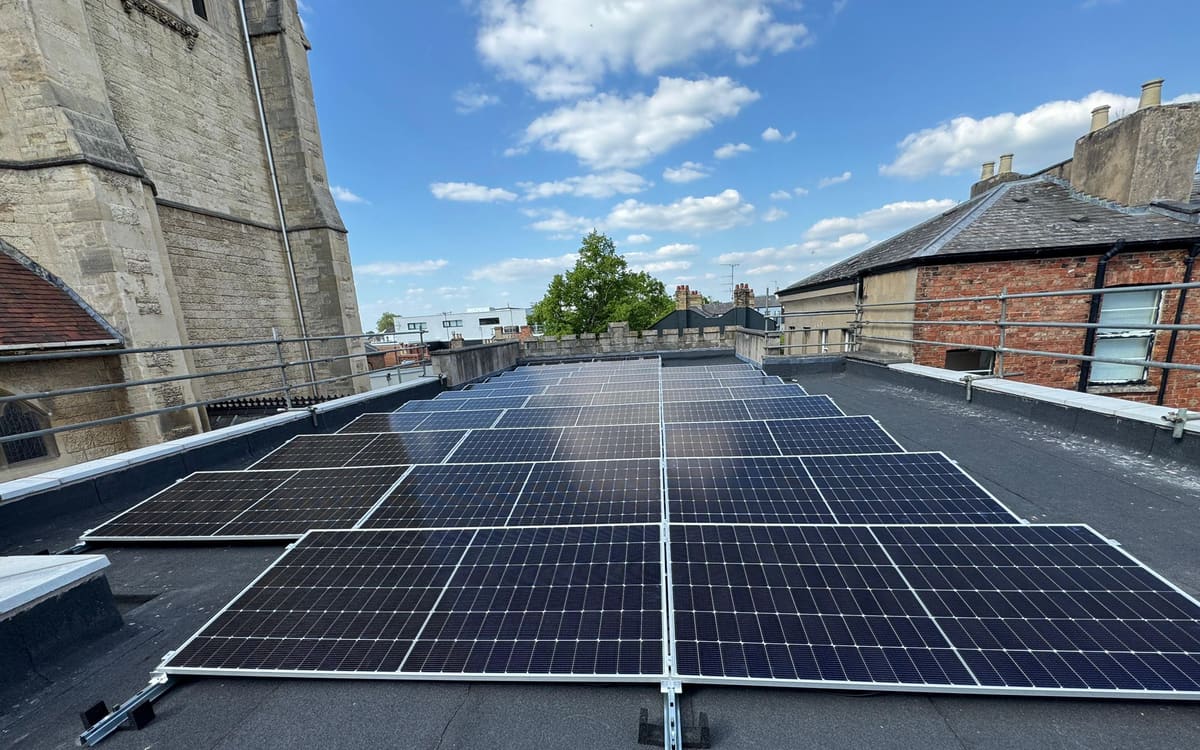
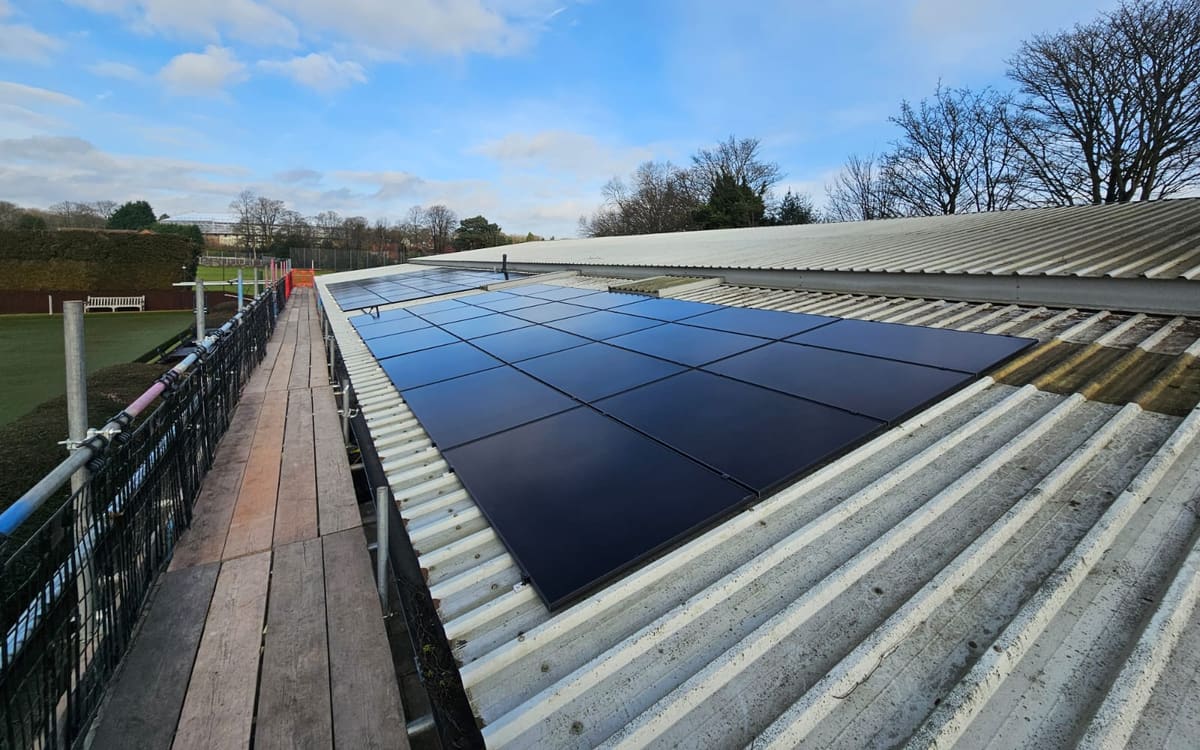
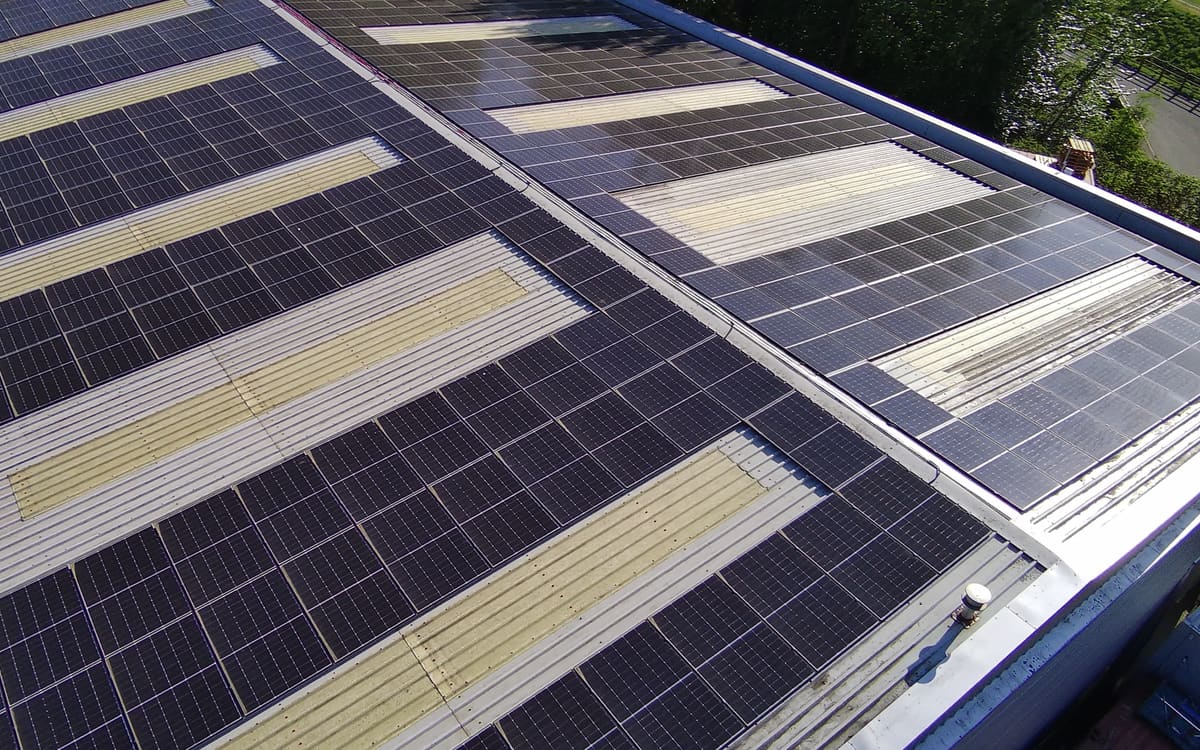
Real commercial projects we have delivered. Every photo on this site is our own work, not stock imagery.
See if your site qualifies for PPA funding
PPA funding suits some sites and not others, and we will tell you plainly which yours is. Send us the roof and the load and we'll assess it.
Get your free, no-obligation quote
Commercial solar, battery, EV or any electrical work — no pressure.
Find out which route fits.
Book the free Business Energy Survey and we will model the same system three ways, funded, loan-financed and purchased, so you can see the real numbers side by side.
Related: Commercial Solar · Battery Storage · Aftercare & Monitoring · payback · capital allowances · SEG
Green Tech Hub Ltd is an Introducer Appointed Representative (Financial Services Register No. 987950) of Phoenix Financial Consultants Limited ("Phoenix"). Phoenix is a credit broker, not a lender. Phoenix is authorised and regulated by the Financial Conduct Authority (FRN: 539195), and offers finance from its panel of lenders. All finance subject to status and credit checks.