
Commercial Solar · Poultry Farms
Solar Panels for Poultry Farms
Poultry is the most electricity-hungry livestock enterprise in British agriculture, and almost none of that demand is discretionary. Ventilation fans run whenever birds are in the shed, lighting runs to a controlled photoperiod, and feed augers, drinker lines, egg belts and manure belts cycle around the clock. You cannot load-shift a broiler shed the way a workshop can shift a compressor: the fans run because the birds need them to. That makes electricity a near-fixed cost per bird placed, on an enterprise whose output price is usually set by an integrator contract or a packer schedule rather than by you.
The buildings, however, are close to ideal for rooftop generation. A modern poultry shed is a long, low-pitch portal frame with a large uninterrupted roof plane, sited in open ground away from tree lines and neighbouring structures, and, unlike a warehouse or a machinery shed, deliberately built with very few roof lights, because the internal lighting regime is controlled. The result is a big, unshaded, unpenetrated south- or east-west-facing surface sitting directly above a load that is drawing power at the same moment the array is generating.
Green Tech Hub has been designing and installing MCS-certified commercial solar and battery systems from Oldbury since 2015, with over 100 MW designed. Our approach to poultry sites starts with a half-hourly consumption analysis across a full batch cycle, not an annual bill total, because on a poultry unit the shape of the load is the entire economic case. See how we work across Birmingham and the West Midlands.
Poultry units are among the highest-load buildings we design for; the cost per kW figures and the regional coverage are on our commercial solar West Midlands page.
Why solar works on poultry farms
The defining feature of a poultry unit is that its ventilation demand and the solar generation curve peak together. Minimum ventilation is modest with day-old chicks, but as the crop grows and ambient temperature rises, fan stages step up sharply, and the heaviest ventilation calls fall on warm summer afternoons, which is precisely when a West Midlands array is producing at its best. On most livestock and industrial buildings the operator is chasing self-consumption; on a poultry shed the coincidence is largely built in. That is why the sector routinely delivers the strongest self-consumption fraction of any agricultural application we survey.
That coincidence matters because a unit you consume is worth several times a unit you export. Manufacturing-sector electricity averaged 17.08 p/kWh in Q2 2025 (DESNZ), while Smart Export Guarantee tariffs sit well below that, so every kilowatt-hour the fans take straight off the roof avoids the full delivered rate, standing charges and levies included. At a realistic West Midlands yield of roughly 900-1,000 kWh per installed kWp per year, a correctly sized poultry array typically lands in the three-to-five-year payback range, and towards the shorter end where self-consumption is genuinely high. The tax position helps: solar is special rate plant, so it is excluded from full expensing, but the 50% special-rate first-year allowance or the Annual Investment Allowance (100% up to £1m) both apply, and onsite generation and storage are exempt from business rates in England to 31 March 2035. We set out the capital and funded routes on our financing page, including fully funded and PPA options on installations above 100 kW.
Broiler and layer units behave differently and should not be sized the same way. A broiler shed runs a pronounced sawtooth: near-zero draw during turnaround, a low brooding-period load, then a steep ramp to peak ventilation in the final fortnight before depopulation. With a crop cycle of roughly 37-42 days and a 50-55 day turnaround, a single-shed broiler site spends a meaningful share of the year effectively empty. Multi-shed sites with staggered placements smooth this out considerably, and on those farms we size the array against the aggregate site profile rather than any one building. A layer unit is the opposite case: a long controlled photoperiod, continuous egg collection, grading and packing, and steadier ventilation give a flatter, more predictable baseload with better winter self-consumption but a lower summer peak.
Storage earns its place on a poultry site for two separate reasons, and they should be costed separately. Commercially, a battery captures midday surplus during turnaround weeks or shoulder seasons and releases it into evening and early-morning lighting and ventilation loads, lifting self-consumption on a site that would otherwise export. Operationally, ventilation is welfare-critical, and a battery can carry short-duration supply interruptions and ride through brownouts while standby plant starts. We size and specify battery storage against measured half-hourly data and the site's actual outage exposure, and we are explicit with clients about what a battery does and does not replace, which we cover below.
What to weigh up first
The roof is the first thing that stops projects, not the last. A great many poultry sheds are lightweight purlin-and-portal structures designed to the minimum loading of their day, and a large proportion of pre-2000 agricultural roofs are fibre-cement, commonly called asbestos cement. HSE treats existing asbestos cement sheets and old roof lights as fragile by definition, and falls through fragile materials cause more roof-work deaths than any other single factor, in agriculture, roughly half of all fall-related deaths and serious injuries involve fragile roofs. You cannot mount PV on asbestos cement sheeting. The realistic options are over-roofing or full sheet replacement, both of which change the capital case materially. Every poultry roof we quote gets a structural assessment and, where the age warrants it, an asbestos check before a design is issued, not after.
The install window is set by your batch calendar and your assurance scheme, not by our diary. Working over a shed containing live birds is not something we will propose. On broiler sites, we programme the works into the turnaround window between crops, which realistically means agreeing dates months ahead and accepting that a delayed depopulation or a failed cleaning swab moves the whole programme. Red Tractor biosecurity standards apply to us as they do to any contractor: visitor records, essential vehicles only inside the biosecure area, wheel disinfection, site-specific footwear and barrier systems at each bird-area entrance. Beyond that, avian influenza controls are outside everybody's control, a national mandatory housing order was in force across England from 6 November 2025 until April 2026, and site lockdowns during a regional outbreak can suspend non-essential works at very short notice. Build that risk into your timetable.
A battery is not a substitute for your statutory backup ventilation. Where animal welfare depends on artificial ventilation, the Welfare of Farmed Animals (England) Regulations 2007 require an appropriate back-up system and an alarm that operates even if the principal electricity supply has failed, tested at least every seven days. In practice that duty is discharged with standby generation and natural ventilation openings, and a solar-plus-battery system does not change your obligation. Storage can meaningfully improve resilience and reduce the number of times standby plant is called on, but it should be specified as a complement to compliant backup, never as a replacement for it. Any supplier telling you otherwise is selling you a regulatory problem.
Seasonality, turnaround gaps and the shed environment all cut the other way. Winter is when heating and minimum-ventilation demand is highest and when a UK array produces least, December output on a typical roof is a small fraction of June's, so solar shaves your summer bill far more than your winter one. Empty turnaround weeks collapse site demand to almost nothing, and any proposal that sizes an array against your annual kWh total without modelling those gaps will overstate self-consumption. Extraction fans discharge a warm, dusty, ammonia-laden plume, so module and fixing placement relative to fan outlets matters for corrosion and soiling, and poultry sites generally need a more attentive cleaning and inspection regime than a clean industrial roof. Finally, check two consents early: rural three-phase capacity and DNO G99 terms are frequently the binding constraint on system size, and if your unit operates under an Environment Agency environmental permit, intensive poultry installations of 40,000 bird places or more do, confirm with your permit holder whether the works need to be notified as a site change.
Proof
Real installs, real roofs.
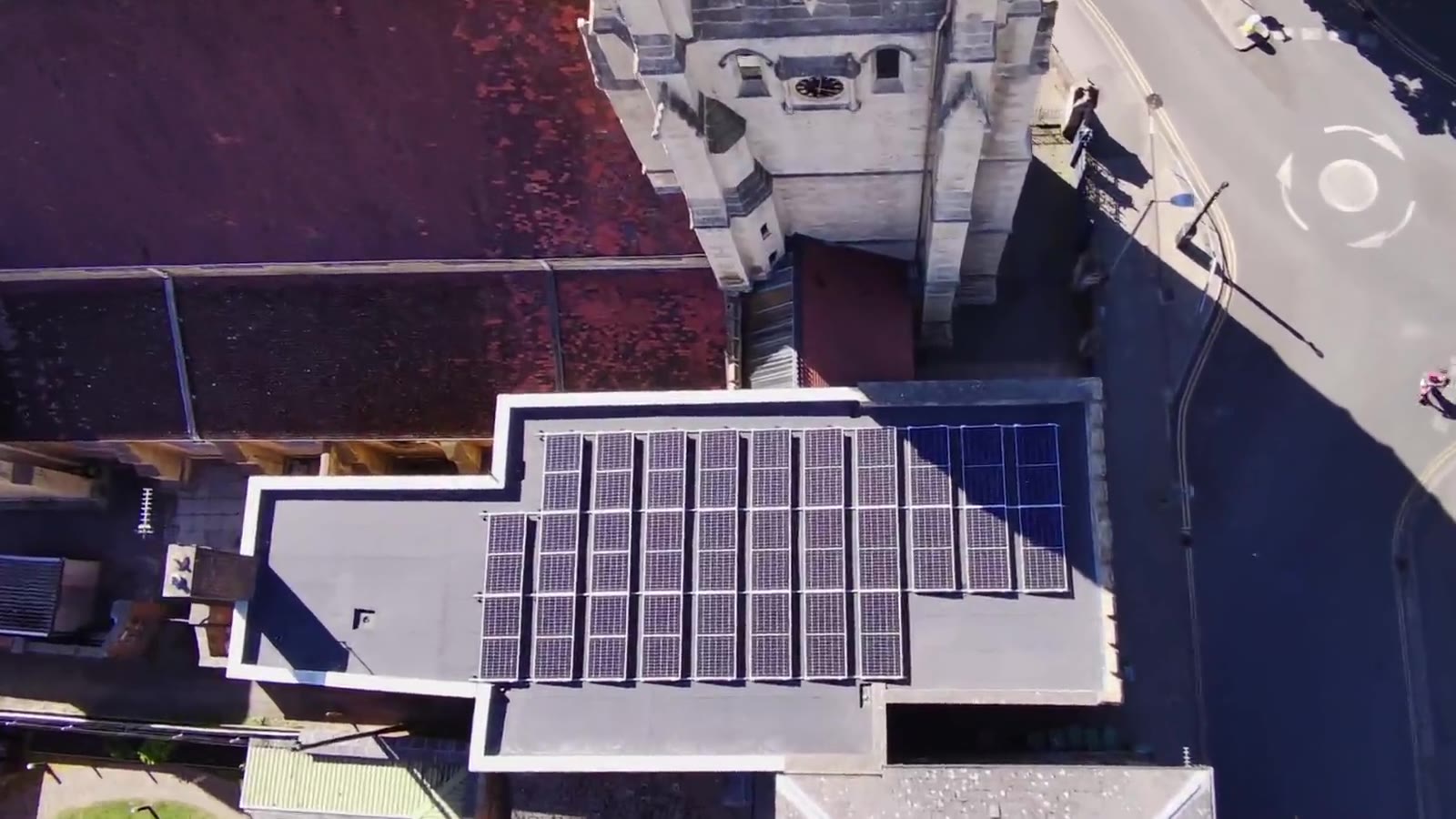
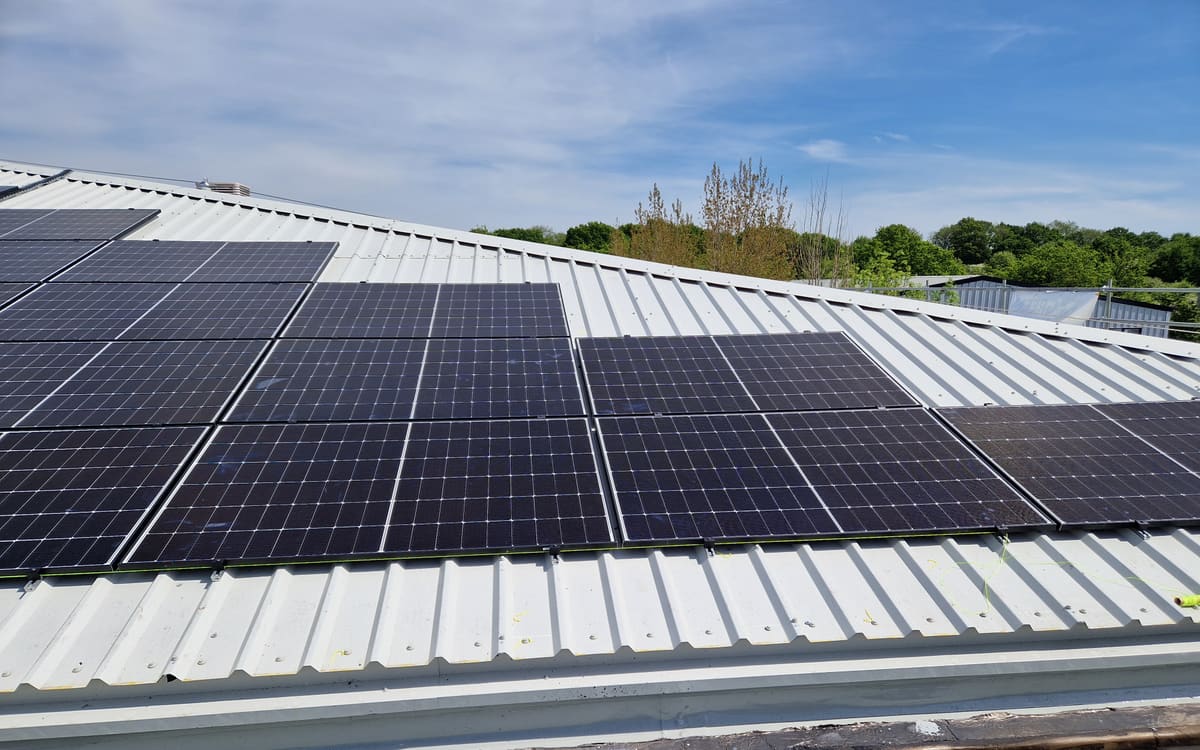
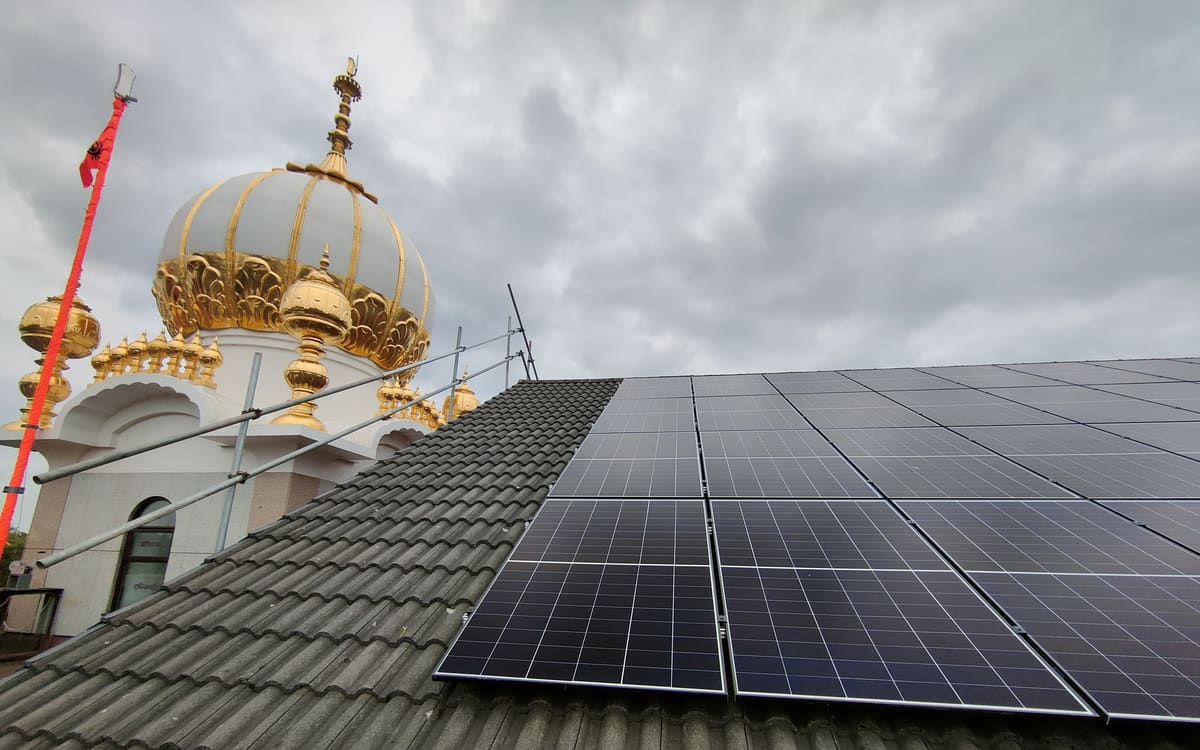
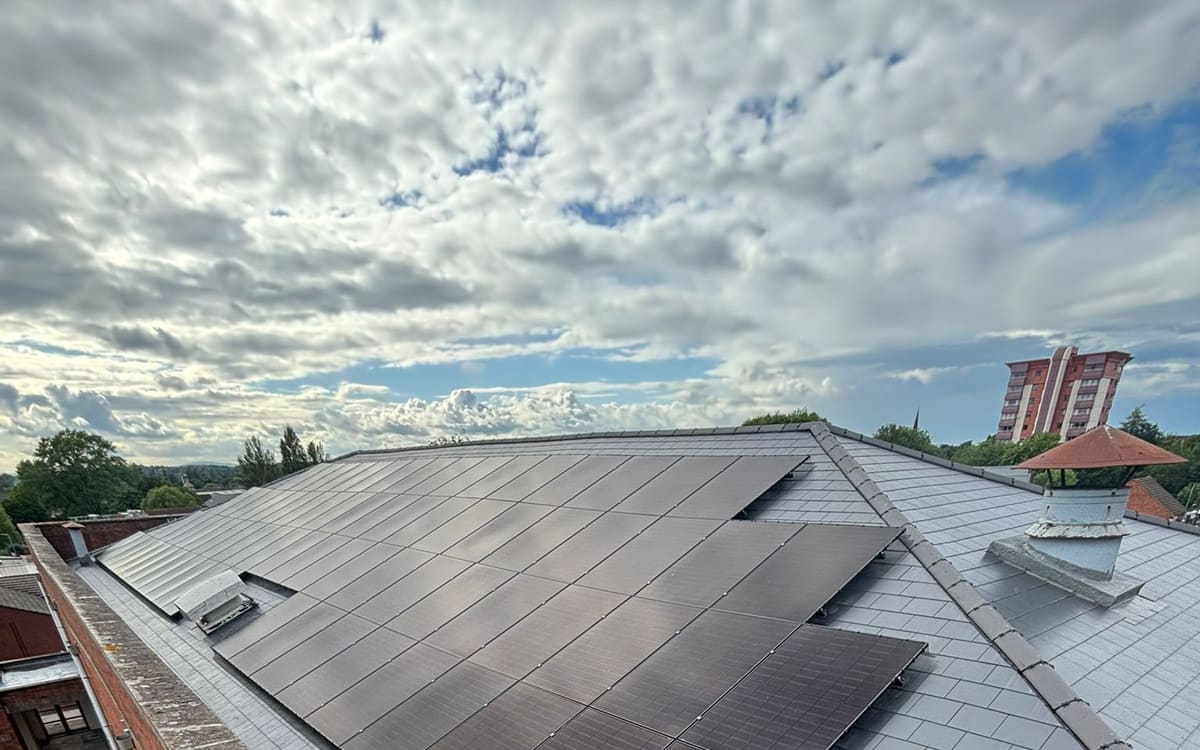
We have no published poultry farms case study yet — so here is our actual recent work instead. Every photo on this site is a Green Tech Hub installation.
The numbers, sourced
Poultry Farms solar in figures
Every figure below comes from a named public source, the same standard we hold our savings estimates to.
-
The UK poultry flock stood at 183 million birds at 1 June 2025, up 4.1% on the year, with broilers rising 7.6% to 121 million and accounting for 66% of all poultry. Breeding and laying fowl totalled 54 million.
Source: Defra, 'Livestock populations in the United Kingdom at 1 June 2025' (GOV.UK)
-
Where the health and well-being of animals depends on an artificial ventilation system, an appropriate back-up system must be provided to guarantee sufficient air renewal, together with an alarm that operates even if the principal electricity supply to it has failed. The alarm must be tested at least once every seven days.
Source: The Welfare of Farmed Animals (England) Regulations 2007, Schedule 1 (legislation.gov.uk)
-
Average electricity prices for consumers in the manufacturing industry were 17.08 pence per kWh in Q2 2025, down 3.9% on the same quarter of 2024, the benchmark a self-consumed solar unit displaces, versus a materially lower Smart Export Guarantee rate for exported units.
Source: DESNZ, Quarterly Energy Prices, September 2025
-
Falls through fragile materials such as roof lights and asbestos cement roofing sheets cause more roof-work deaths than any other single cause; in agriculture roughly half of all deaths and serious injuries from falls involve work on fragile roofs. Existing asbestos cement sheets and old roof lights should always be treated as fragile.
Source: HSE, 'Fragile roofs: what you need to know as a building owner, user or occupier' (CIS73) and HSG33 Health and Safety in Roof Work
-
Broiler stocking density above 33 kg/m² and up to 39 kg/m² is permitted only where additional requirements, including ventilation provisions, are met and the keeper notifies the Secretary of State. Lighting must follow a 24-hour rhythm including at least 6 hours of darkness in total.
Source: Defra, Code of Practice for the Welfare of Meat Chickens and Meat Breeding Chickens; Welfare of Farmed Animals (England) Regulations 2007, Schedule 5A
-
A UK broiler is typically finished at 37-42 days, with system turnaround of around 50-55 days including cleaning and downtime, allowing up to about 7 crops per year under good management, so a single-shed site has extended periods of near-zero electrical demand.
Source: Farm Advisory Service (FAS Scotland), poultry factsheet
-
Eligible onsite renewable generation and storage in England, including rooftop solar and batteries serving the property's own consumption, is exempt from business rates from 1 April 2022 to 31 March 2035, applied by the Valuation Office Agency without any application.
Source: HM Treasury, Spring Statement 2022 green business rates reliefs; Valuation Office Agency
-
Solar PV is classified as special rate plant for capital allowances, so it is excluded from full expensing. The available routes are the 50% special-rate first-year allowance or the Annual Investment Allowance, which gives 100% relief on up to £1m of qualifying expenditure.
Source: HMRC Capital Allowances Manual; GOV.UK capital allowances guidance
-
Red Tractor Chicken standards require that access is limited to essential visitors with a visitor record kept, that only essential vehicles enter the biosecure area with wheels cleaned and disinfected, and that a physical barrier footwear system of no less than 30 cm is provided at the entrance to each biosecure bird area, conditions any solar contractor on site must work within.
Source: Red Tractor Assurance, Chicken standards: Biosecurity and Disease Control
-
A national mandatory housing order applied across England from 00:01 on 6 November 2025 for all keepers with more than 50 birds, with housing measures lifted on 9 April 2026, an example of the disease-control disruption that can suspend non-essential works on a poultry site at short notice.
Source: Defra / APHA Avian Influenza Prevention Zone announcements (GOV.UK)
Data last reviewed: July 2026
The next step
If you run broiler or layer sheds in Birmingham, the West Midlands or the surrounding counties, the starting point is data, not a quote. Our free Business Energy Survey analyses your half-hourly consumption across a full batch cycle, checks the roof structure and sheet material before anything is designed, models realistic self-consumption against your turnaround gaps, and gives you an honest payback figure with the caveats attached. It is director-led, the CAD roof design is done in-house, and there is no obligation at the end of it. Call 0121 661 6400 or request a survey and we will work around your placement calendar.
Poultry Farms solar questions
Will installing solar disrupt the birds or mean depopulating a shed early?
No. We will not propose working over a shed with birds in it. On broiler units the installation is programmed into the turnaround window between crops, and on layer units we phase works building by building around your routine. That means agreeing dates well ahead and accepting that a delayed depopulation, a failed cleaning swab or a disease control order can move the programme. We would rather rebook than compromise a crop, and we plan the sequence around your batch calendar at survey stage.
Can solar and a battery keep ventilation running during a power cut?
A correctly specified battery system can carry ventilation through short interruptions and brownouts, and can reduce how often standby plant is called on. But it does not discharge your legal duty. Under the Welfare of Farmed Animals (England) Regulations 2007, where welfare depends on artificial ventilation you must provide an appropriate back-up system and an alarm that works even if the mains supply has failed. Treat storage as resilience that complements your compliant backup, not as a replacement for it, and keep your generator and alarm testing regime in place.
Do I need planning permission for solar on a poultry shed?
In England, rooftop solar on non-domestic buildings is largely permitted development, and the previous 1 MW rooftop capacity cap was removed in November 2023, which opened up much larger agricultural arrays. Permitted development is conditional, though: siting, appearance, listed buildings, conservation areas, protected landscapes and prior approval requirements can all apply, and the building itself must be lawful. Glint and glare assessments can be requested near aerodromes. We confirm the route with your local planning authority before design sign-off rather than assuming it.
Which gets the better return, a broiler unit or a layer unit?
Broiler units usually show the stronger headline self-consumption because peak ventilation in the final fortnight of a summer crop coincides almost exactly with peak generation. The catch is the turnaround gaps, when site demand collapses to nearly nothing. Layer units have a flatter, more continuous load from the controlled photoperiod, egg collection, grading and steadier ventilation, so they self-consume more reliably year-round but with a lower summer peak. Multi-shed broiler sites with staggered placements get the best of both. The honest answer only comes from half-hourly data over a full cycle, which is what our survey collects.
Will ammonia and dust from the extraction fans damage the panels?
It is a genuine sector-specific issue and it should be designed around rather than ignored. Exhaust plumes from ridge and gable fans are warm, dusty and ammonia-laden, which accelerates corrosion of fixings and mounting hardware and increases soiling on nearby modules. We keep array layout clear of fan discharge paths where the roof allows, specify appropriate corrosion-class fixings, and set a cleaning and inspection interval more frequent than we would on a clean industrial roof. Budget for that in the operating cost, not just the capital cost.
Can I fund this without tying up capital in a poultry business that is already capital-hungry?
Yes. Alongside outright purchase, we offer fully funded and power purchase agreement options on installations above 100 kW, where the system is funded and you buy the generated power at an agreed rate. On the tax side, solar is special rate plant so full expensing does not apply, but the 50% special-rate first-year allowance or the Annual Investment Allowance at 100% up to £1m are both available, and onsite generation and storage are exempt from business rates in England to 31 March 2035. We will set the numbers out both ways so you can compare against your integrator contract terms with your accountant.
Other sectors we serve
-
Offices & Business Parks
A weekday nine-to-five load that matches generation almost hour for hour.
-
Student Accommodation
All-inclusive bills mean every kWh generated lands straight on the operator's P&L.
-
HMO & Apartment Blocks
Communal supply, lifts, corridor lighting and pumps, is the load solar pays down.
Get the numbers for your poultry farms site
Get your free, no-obligation quote
Commercial solar, battery, EV or any electrical work — no pressure.