
Commercial Solar · HMO & Apartment Blocks
Solar Panels for HMOs & Apartment Blocks
Every HMO and apartment block has an energy bill nobody talks about: the landlord's communal supply. It is the meter that feeds the lifts, the stairwell and corridor lighting, emergency lighting, the door-entry system, CCTV, cold-water booster pumps, communal heating and hot-water circulation pumps, mechanical ventilation, and the bin store and car park lights. It runs seven days a week, all year, and no resident in the building has any personal incentive to switch any of it off. Whoever holds that supply: a freeholder, a resident management company, a managing agent or an HMO operator, carries the cost, and recovers it through service charges or rent. When unit rates move, that increase lands squarely on the service charge budget and becomes an argument at the next AGM.
The buildings themselves are unusually well suited to solar. Purpose-built blocks: particularly the 1960s to 1990s stock that fills Birmingham, Sandwell, Wolverhampton, Coventry and the Black Country: typically sit above a large, flat or shallow-pitched roof that serves no commercial purpose and is rarely overshadowed, because the block is usually the tallest thing on the plot. Crucially, the communal load is small relative to that roof area, so a scheme almost never needs the whole roof, and there is a single point of connection: one landlord supply meter, one array, one bill to reduce. Converted HMOs are smaller in scale but follow the same logic wherever a house has been split into units with a shared landlord meter for lighting, heating plant and hot water.
One point of scope matters more here than in any other sector, so we will be blunt about it up front: this is commercial solar aimed at the communal supply, not at the individual flats. Each flat has its own meter and its own supplier, and putting generation behind the landlord meter cannot lawfully reduce a tenant's or leaseholder's personal bill without becoming a licensed electricity supplier or building a private wire network. Designing to the communal load is the route that actually works, and it is the one almost nobody in the West Midlands is quoting for properly.
Apartment blocks across the city are surveyed from Oldbury; the areas we cover and the official cost figures are on our commercial solar Birmingham page.
Why solar works on hmo & apartment blocks
The communal load profile is the reason this sector works. A warehouse's demand collapses at weekends and an office's collapses at 6pm, but a block of flats has a genuinely flat, round-the-clock baseload: corridor and emergency lighting that never switches off, door entry and CCTV drawing continuously, pumps and lifts cycling through the day, and no Christmas shutdown. That means a modestly sized array can be almost entirely self-consumed without any clever control strategy, because there is always something on site drawing power when the sun is up. The design discipline is the opposite of the one most installers apply: you deliberately undersize the array to the daytime baseload rather than filling the roof.
The economics follow directly from that. A unit you generate and use yourself displaces the full delivered import price on the landlord supply; a unit you export earns a Smart Export Guarantee tariff, which is typically worth substantially less. On a well-oriented West Midlands roof you can expect roughly 900–1,000 kWh per kWp per year, so an illustrative 20 kWp array produces in the region of 18,000–20,000 kWh annually, enough to cover a meaningful share of a mid-sized block's communal consumption. We size that from measured half-hourly data pulled from the landlord meter, not from an annual kWh total on a bill, because the whole question is what the block is drawing between 9am and 4pm.
Batteries earn their place here more readily than in most sectors, because the communal load does not stop at night. Corridor and emergency lighting, door entry, CCTV, lift standby and pump cycling all continue through the small hours, so stored generation has somewhere useful to go rather than sitting idle until the next morning. That combination of a seven-day profile and a significant overnight baseload is what makes battery storage stack up, the same design logic we applied at the GNG Gurdwara, a community building whose usage runs across all seven days rather than a conventional working week.
Roof characteristics are the last piece. Most purpose-built blocks have flat roofs, which we design as ballasted, non-penetrative east–west arrays so the waterproofing is never breached and wind uplift is resisted by weight and layout rather than fixings. Those roofs are also cluttered in predictable ways: lift motor rooms, water tank housings, plant enclosures, roof vents, satellite dishes and telecoms masts all cast moving shadows that a spreadsheet estimate will miss entirely. Our directors produce the CAD roof layout in-house and shade-model around that plant before anyone quotes a number, the same approach we used on the complex industrial roof at Rapiscan in Stoke. Blocks held in a portfolio can be surveyed together and rolled out in stages, as we did across the multi-site estate at Clifton Diocese.
What to weigh up first
Consent is the hardest part of this sector, and it kills more schemes than any technical issue. You need to establish who actually owns the roof: many leases demise the roof or the airspace above it separately, and in blocks where the freeholder has sold the airspace for future development the array may simply have nowhere to go. Where the works will be funded through the service charge, section 20 of the Landlord and Tenant Act 1985 requires formal consultation with leaseholders whenever any one leaseholder's contribution to qualifying works exceeds £250, skip it and recovery is capped at £250 per leaseholder regardless of what the job cost. You also need to check that the lease actually permits recovery of improvement works at all, as many older leases allow repair and maintenance but not capital improvement. Expect a benefit-mismatch conversation too: leaseholders fund the works but the saving arrives as a lower service charge over years, which is a harder sell than a straightforward repair.
Be realistic about what this can and cannot do for the flats. Solar behind the landlord meter reduces communal consumption only. Reselling that electricity to residents is constrained by Ofgem's Maximum Resale Price rules, and supplying flats directly means either a licensed supply or a private wire arrangement, both of which carry costs and complexity out of all proportion to a rooftop array on a typical block. Individual-flat solar is usually impractical for the same reason: a single flat has no exclusive roof rights, no separate roof area, and no viable route for cabling and isolation through common parts. It also means the array will not change the EPC of any individual flat, so it does not, on its own, deliver MEES compliance, the flat EPCs are driven by fabric, glazing and heating systems.
The building itself imposes real constraints. Flat roofs on older blocks often have limited spare structural capacity for ballast, so a structural check is not optional; roof coverings need enough remaining service life to justify a 25-year array, and if the felt or asphalt has five years left the sensible answer is to re-roof first or wait. Asbestos in older roof build-ups and plant rooms must be surveyed before anyone lifts a covering. If the block is at least 18 metres tall or has at least seven storeys with two or more residential units it is a higher-risk building under the Building Safety Act 2022, and building work goes through the Building Safety Regulator rather than local authority building control, which lengthens the programme considerably. Anything mounted on an external wall of such a building, as opposed to the roof, is caught by the combustible materials restrictions in regulation 7(2) of the Building Regulations. And note that a block of flats is domestic premises for planning purposes, falling under Class A of Part 14 of the GPDO, so the December 2023 removal of the 1MW rooftop threshold applied to non-domestic Class J and does not help a residential block.
Finally, the numbers. A communal-supply scheme is a small array carrying the same fixed costs as a large one: access equipment, scaffolding or a hoist, DNO application, design, testing and commissioning, so the cost per kWp is higher than on an industrial roof and the payback is usually longer than the roughly three years we see on large warehouse installations. On a typical block, five to eight years is a more honest expectation, and we will tell you if the communal load is too small to justify the job at all. Output is also seasonal in a way that works against this particular load: December generation is a fraction of June's, while corridor and stairwell lighting demand peaks in exactly those dark winter months. Installation means scaffolding or hoist access in a resident car park, deliveries through occupied common parts, and often a single stair core to work from, disruption that needs planning and communicating to residents well in advance, not sprung on them.
Proof
Real installs, real roofs.
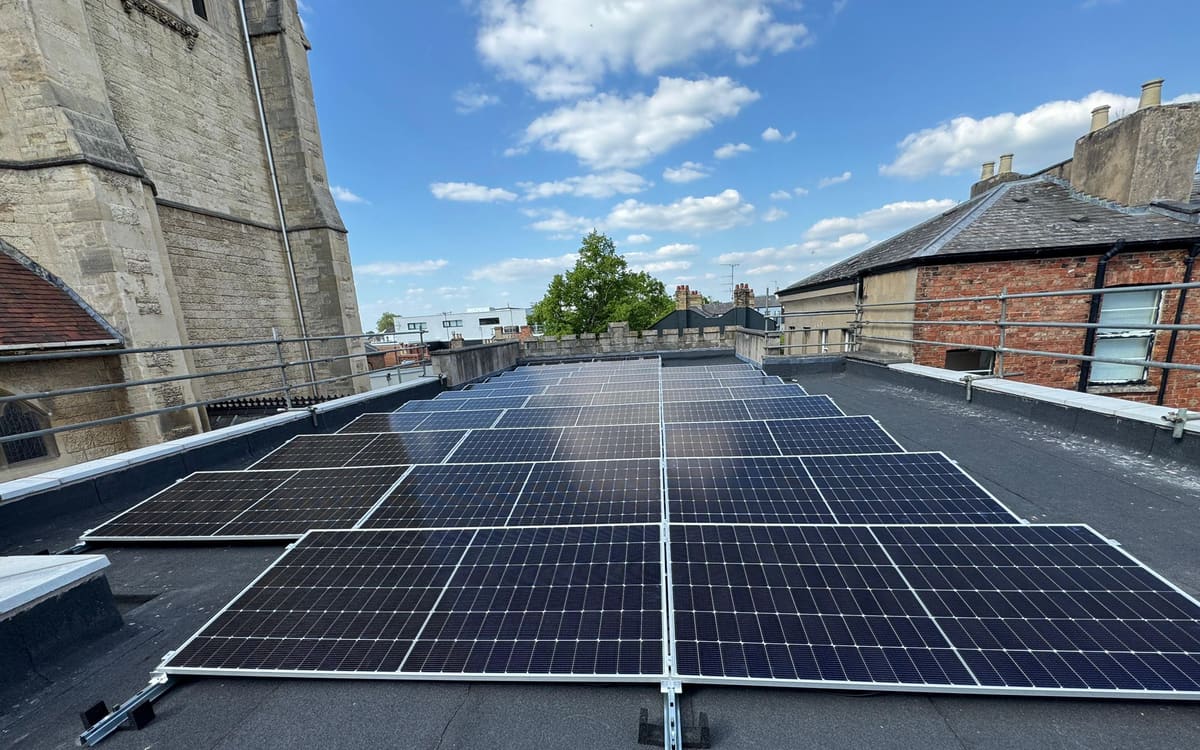
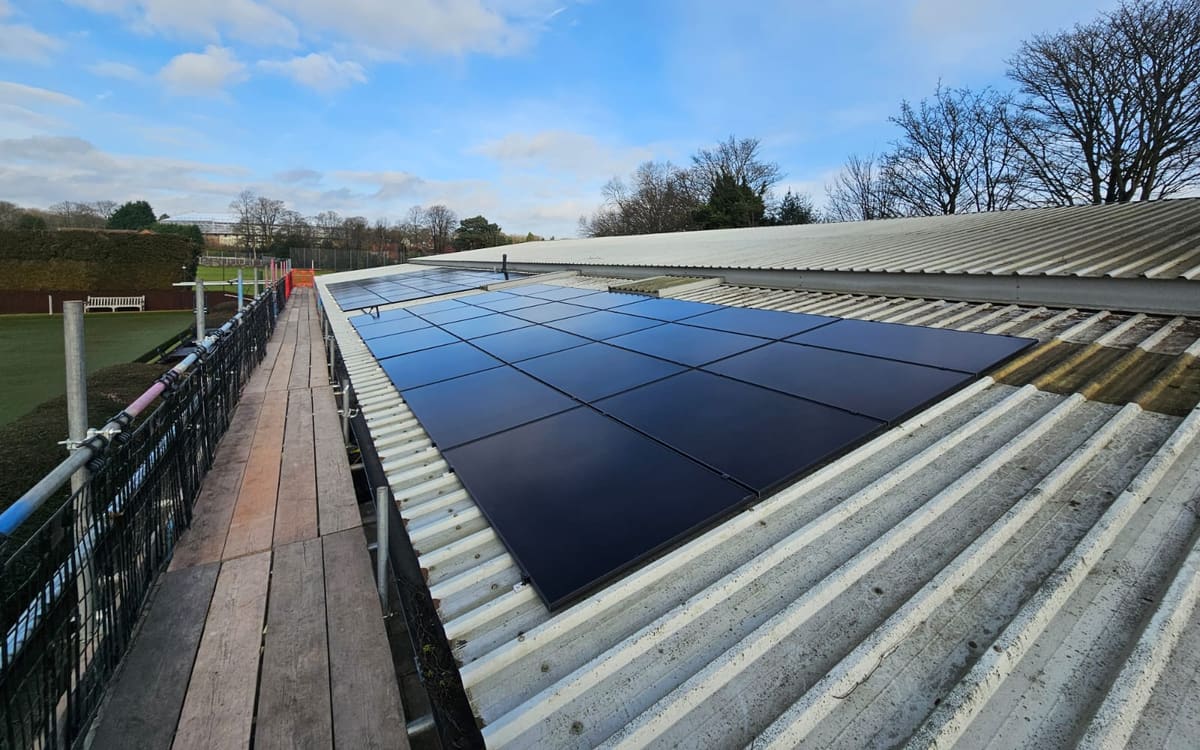
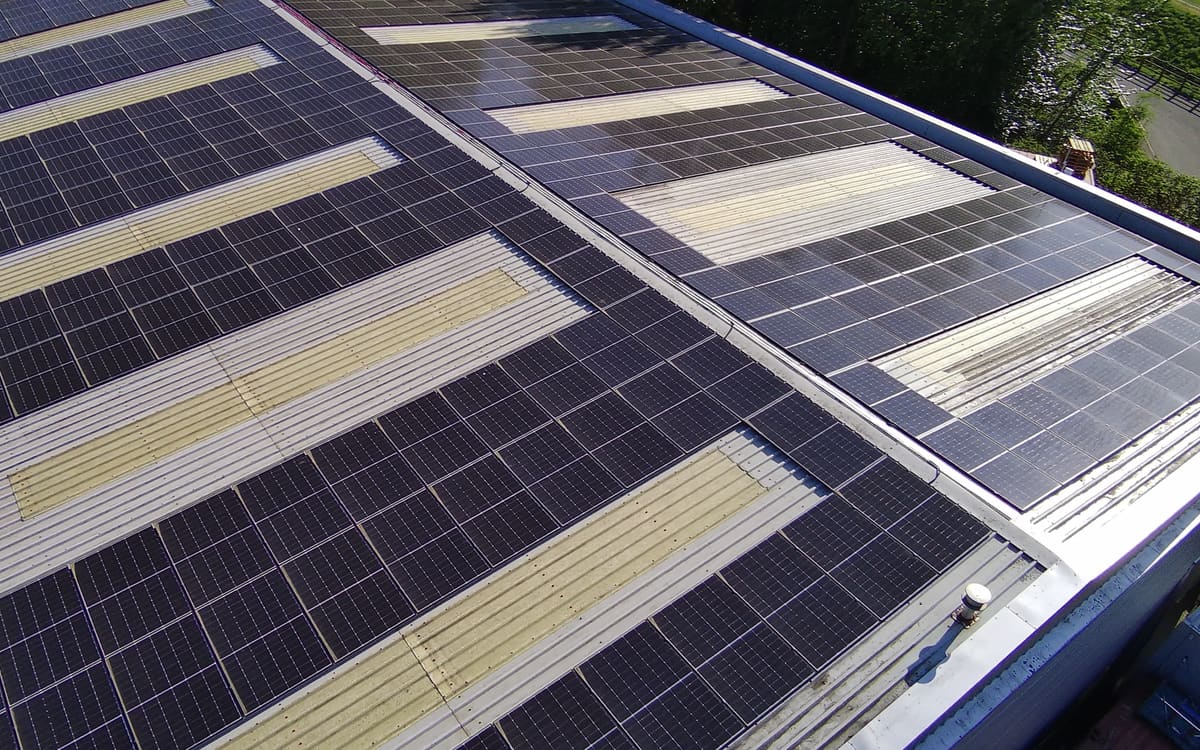
We have no published hmo & apartment blocks case study yet — so here is our actual recent work instead. Every photo on this site is a Green Tech Hub installation.
The numbers, sourced
HMO & Apartment Blocks solar in figures
Every figure below comes from a named public source, the same standard we hold our savings estimates to.
-
A property is a large HMO requiring a mandatory licence where it is rented to five or more people forming more than one household, some or all tenants share a toilet, bathroom or kitchen, and at least one tenant pays rent. Renting out an unlicensed HMO can attract an unlimited fine.
Source: GOV.UK, House in multiple occupation licence
-
Since 1 April 2020 landlords cannot let or continue to let a domestic property covered by the MEES Regulations with an EPC rating below E unless a valid exemption is registered, with financial penalties of up to £5,000 for a non-compliant private rented property.
Source: GOV.UK, Domestic private rented property: minimum energy efficiency standard (landlord guidance)
-
The Warm Homes Plan, published 21 January 2026, sets a single compliance deadline requiring privately rented homes in England and Wales to reach the equivalent of EPC band C by 1 October 2030, subject to a £10,000 per-property cost cap.
Source: DESNZ, Warm Homes Plan (GOV.UK, published 21 January 2026)
-
Where qualifying works would cost any one leaseholder more than £250, the landlord must carry out statutory section 20 consultation; without it, recovery through the service charge is limited to £250 per leaseholder for qualifying works and £100 per year for long-term agreements, however much the works actually cost.
Source: Landlord and Tenant Act 1985 s.20 and the Service Charges (Consultation Requirements) (England) Regulations 2003 (legislation.gov.uk)
-
Class A of Part 14 of the GPDO covers solar equipment on 'a dwellinghouse or a block of flats', so a residential block is domestic premises for permitted development purposes. The removal of the 1MW capacity threshold by the 2023 amendment applied to Class J, which covers non-domestic premises.
Source: Town and Country Planning (General Permitted Development) (England) Order 2015, Sch.2 Part 14, as amended by SI 2023/1279 (legislation.gov.uk)
-
A building is a higher-risk building in occupation if it has at least seven storeys or is at least 18 metres in height and contains at least two residential units; building work on such a building must be submitted to the Building Safety Regulator rather than a local authority or approved inspector.
Source: GOV.UK, Criteria for being a higher-risk building during the occupation phase of the new higher-risk regime (Building Safety Act 2022)
-
Materials forming part of an external wall, and specified attachments including solar panels, on relevant residential buildings over 18 metres must achieve European Class A1 or A2-s1, d0 limited combustibility.
Source: Regulation 7(2), Building Regulations 2010 (combustible materials in external walls)
-
A landlord reselling gas or electricity to a tenant for domestic use may not charge more than they paid for it under Ofgem's Maximum Resale Price rules; the MRP does not apply to energy used in the landlord's own facilities such as hallways, stairs and laundry rooms in a block of flats, which are billed separately, for example through a service charge.
Source: Ofgem, Maximum Resale Price guidance
-
The average Smart Export Guarantee tariff offered was 10.8p/kWh in SEG Year 5 (1 April 2024 to 31 March 2025), while DESNZ reported an average electricity price of 17.08p/kWh for manufacturing-sector consumers in Q2 2025, the gap that makes a self-consumed unit worth more than an exported one.
Source: Ofgem, Smart Export Guarantee Annual Report April 2024 to March 2025; DESNZ, Quarterly Energy Prices, September 2025
-
Eligible plant and machinery used in onsite renewable electricity generation and storage is exempt from business rates in England until 31 March 2035, applied by the Valuation Office Agency automatically without any application.
Source: GOV.UK / Valuation Office Agency, business rates exemption for eligible green plant and machinery (in force from 1 April 2022)
-
HMRC treats all capital expenditure on solar panels as special rate expenditure. Special rate assets are excluded from full expensing, so the available routes are the 50% special-rate first-year allowance for companies or the Annual Investment Allowance at 100% on up to £1m of qualifying spend.
Source: HMRC Capital Allowances Manual CA22335 and CA20008 (GOV.UK)
-
There were around 25.4 million dwellings in England in 2023, of which 4.9 million (19%) were privately rented, and 25% of private rented dwellings are low-rise purpose-built flats, the stock type most likely to carry a landlord communal supply.
Source: MHCLG, English Housing Survey 2023 to 2024, Chapter 1: profile of households and dwellings
Data last reviewed: July 2026
The next step
If you hold the landlord supply for an HMO, an apartment block or a portfolio of blocks across Birmingham and the West Midlands, start with the data rather than a quote. Our free Business Energy Survey pulls the half-hourly consumption profile from your communal meter, establishes what the block actually draws between 9am and 4pm, and produces a director-led CAD roof layout that shade-models around your lift motor room, tank housings, vents and masts. You get honest sizing, a realistic payback, and a clear view of the consent, structural and Building Safety Act issues before you spend anything, including a straight answer if the communal load is too small to justify the work. MCS-certified (NIC-600049), RECC 00067281 and NICEIC registered, with a 25-year panel performance warranty. Call 0121 661 6400 or arrange your free Business Energy Survey.
HMO & Apartment Blocks solar questions
Will solar panels on the roof reduce the electricity bills for individual flats?
No. Each flat has its own meter and its own supplier, and a rooftop array connected to the landlord supply reduces communal consumption only: lifts, corridor and emergency lighting, door entry, CCTV, pumps and communal plant. Supplying the flats themselves would require either a licensed electricity supply or a private wire network, and Ofgem's Maximum Resale Price rules limit what a landlord can charge a tenant for resold energy in any case. The benefit reaches residents indirectly, as a lower communal energy line in the service charge or rent.
Do we need planning permission for solar on a block of flats?
Often not, but do not assume the commercial rules apply. A block of flats is domestic premises under Class A of Part 14 of the GPDO, not the non-domestic Class J route whose 1MW capacity cap was removed in December 2023. Class A permits roof-mounted equipment subject to conditions, including that it must not sit more than 0.6 metres above the highest part of a flat roof, must not exceed the ridge on a pitched roof, and is excluded on buildings within the curtilage of a listed building. Conservation area restrictions also apply to wall-mounted equipment facing a highway. We check the specific constraints on your block during the survey rather than assuming permitted development.
Do leaseholders have to be consulted before we install?
If the cost is being recovered through a variable service charge and any single leaseholder's contribution exceeds 250 pounds, yes. Section 20 of the Landlord and Tenant Act 1985 requires the statutory consultation procedure set out in the Service Charges (Consultation Requirements) (England) Regulations 2003, and missing it caps recovery at 250 pounds per leaseholder no matter what the works cost. You should also check that the lease actually allows recovery for improvement works and not just repair and maintenance, because many older leases do not, and confirm who holds the roof and the airspace above it.
How big a system does a communal supply actually need?
Usually far smaller than the roof would take. The right size is set by the block's daytime baseload, which we establish from half-hourly data on the landlord meter rather than from an annual figure on a bill. In the West Midlands a well-oriented array produces roughly 900 to 1,000 kWh per kWp per year, so a 20 kWp system generates around 18,000 to 20,000 kWh annually. Oversizing simply pushes generation into export at a Smart Export Guarantee rate worth considerably less than the import price you would otherwise have avoided.
Does communal solar help with MEES or the EPC C by 2030 requirement?
Not directly, and we would rather say so than let you assume otherwise. EPCs for rented flats are assessed per dwelling and are driven by fabric, glazing and heating systems, so generation sitting behind a separate landlord meter does not feed into an individual flat's rating. Communal solar reduces the landlord's own operating cost and the building's carbon footprint. Meeting the current EPC E minimum, and the EPC band C standard for privately rented homes set for October 2030 in the Warm Homes Plan, is a separate programme of fabric and heating work at flat level.
Our block is over 18 metres. Does that change the process?
Yes, significantly. A building of at least 18 metres, or at least seven storeys, with two or more residential units is a higher-risk building under the Building Safety Act 2022, so building work goes through the Building Safety Regulator rather than local authority building control or an approved inspector, and the approval programme is longer. Anything fixed to an external wall rather than the roof is also caught by the regulation 7(2) combustible materials restrictions, which require A1 or A2-s1, d0 classification. Access, hoist or crane arrangements and working over occupied dwellings all need to be designed in from the start rather than resolved on site.
What payback should we realistically expect?
Longer than the headline figures you will see quoted for industrial rooftops. A communal array is small but carries the same fixed costs for access, DNO application, design, testing and commissioning, so the cost per kWp is higher. Five to eight years is a more honest range for a typical block: for scale, even the 154 kWp warehouse system with 64 kWh of battery storage we installed for Harris Parts, on a far larger roof with heavy daytime load, documents a return of five years and four months. Onsite generation and storage are exempt from business rates in England to 31 March 2035, and solar qualifies for the 50% special-rate first-year allowance or the Annual Investment Allowance, but not full expensing. If the communal load is too small to justify the work, we will tell you at survey stage.
Other sectors we serve
-
Glamping & Leisure
Summer-peak demand meets summer-peak generation, often on a weak rural connection.
-
Community Buildings & Places of Worship
Seven-day, irregular usage where solar plus storage cuts running costs for good.
-
Schools & Education
Term-time weekday load, holiday surplus, and a live feed the curriculum can use.
Get the numbers for your hmo & apartment blocks site
Get your free, no-obligation quote
Commercial solar, battery, EV or any electrical work — no pressure.