
Commercial Solar · Glamping & Leisure
Solar Panels for Glamping Sites & Rural Leisure Parks
Glamping sites have an energy problem that almost no other commercial sector shares: the electrical supply was usually sized for something else entirely. Most rural leisure businesses sit on a farm, a smallholding or a redundant paddock, fed by a long low-voltage spur that was specified decades ago for a farmhouse, a milking parlour or a workshop. Then the site adds twelve pods with underfloor heating, six hot tubs, a shower block, an EV charger and a coffee machine in reception, and the supply that was comfortable at 40 amps is suddenly the constraint on the whole business plan. Asking the DNO for more capacity often returns a reinforcement quote with five figures in it and a connection date measured in seasons, not weeks.
What makes this sector unusual is that the buildings you actually own are far better solar hosts than the pods your guests sleep in. The amenity and shower block, the reception and shop, the laundry, the machinery barn and the converted stone outbuilding are typically single-storey, uncluttered, structurally simple and, critically, non-domestic, which puts them inside permitted development for rooftop solar. Where roof area genuinely runs out, glamping sites have something a warehouse never does: unproductive paddock, scrub or set-aside land where a ground-mounted array can sit behind a hedge line without touching a single guest sightline.
And then there is the coincidence that makes this niche genuinely attractive. Your demand peaks in July and August. So does your generation. Almost every other commercial solar customer we design for has to work hard to line up load with sunshine; a seasonal leisure site gets that alignment for free. The engineering question is not whether solar suits a glamping business. It is how much of the summer output you can genuinely consume on site, and what you do with the winter.
Rural sites across Worcestershire, Staffordshire and Shropshire are covered from Oldbury; the regional overview is on our commercial solar West Midlands page.
Why solar works on glamping & leisure
The economics of commercial solar are driven almost entirely by self-consumption. A unit you generate and use yourself displaces a unit you would otherwise buy at the full non-domestic rate, DESNZ Quarterly Energy Prices put the average electricity price for manufacturing-sector consumers at 17.08p/kWh in Q2 2025, and small rural non-domestic supplies with standing charges and distribution costs layered on typically sit above that. A unit you export earns the Smart Export Guarantee rate instead, which is a fraction of the same number. Every design decision on a glamping site should therefore be judged against one question: does this kilowatt-hour get used on site?
Glamping load profiles answer that question better than most. Hot tubs are the dominant continuous load and the reason this sector works so well: a tub held at temperature draws power around the clock, seven days a week, including through the middle of the day when the array is at full output. Shower blocks concentrate demand into a morning and evening peak, which is exactly the shape a battery is for. Add pod heating in the shoulder months, laundry, refrigeration in the site shop and a hot-water cylinder, and you have a base load that runs all summer rather than collapsing at 5pm the way an office does. On a well-oriented West Midlands roof we design to roughly 900–1,000 kWh per kWp per year, and on a busy site a large share of that lands on loads that are already running.
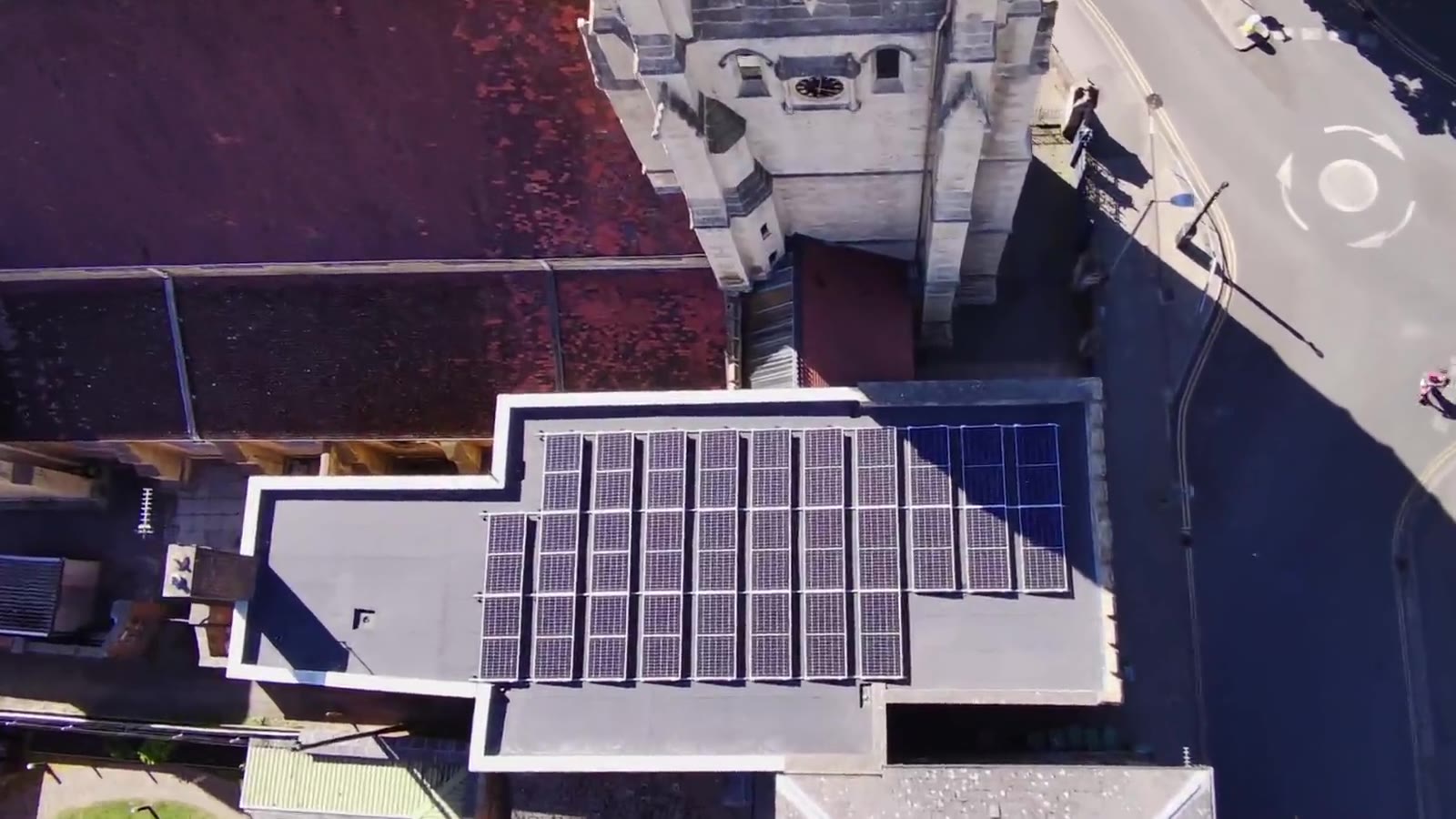
Batteries do more here than shift a little evening demand. On a site with a constrained supply, battery storage acts as capacity: it lets you serve a 7pm shower-block-plus-six-hot-tubs peak without upgrading the incoming connection, which is often the difference between a project that pays back in three or four years and a grid reinforcement quote that never pays back at all. It also lets a hybrid or near-off-grid design work, carrying midday surplus into the evening rather than exporting it at a low rate. This is the same problem we solved for GNG Gurdwara, a community site with a genuinely irregular seven-day usage profile where PV alone would have exported at the wrong times and storage made the numbers work.
The roofs themselves are usually straightforward. Modern amenity blocks and barn conversions are single-storey, low-pitch or flat, with short cable runs to a plant room and no complex rooftop plant to work around. Ground-mount, where consent allows, is better still: you get optimal 30–35° pitch and true south orientation rather than whatever the barn happens to face, easier maintenance access, and the ability to size the array to the site rather than to the roof. Guest EV charging is then the natural third layer, daytime charging by guests who are already on site is close to perfect self-consumption, and it turns an amenity your guests increasingly expect into a load that improves your solar economics rather than adding to your bill.
What to weigh up first
Start with an honest structural point: the pods are usually the wrong place to put panels. Glamping units are small, frequently shaded by the very trees that make the site sell, often finished in cedar shingle, felt or curved membrane that is awkward to fix into, and in some cases not wholly owned by the operator. Fixing a handful of panels to each pod roof gives you a fragmented array, dozens of penetrations to maintain and a poor yield. The amenity block, the barn, the reception and, where consent allows, the ground are where the generation should come from. If a site has no suitable building and no available land, we will tell you that rather than design something marginal.
Planning is where this sector diverges sharply from an industrial estate. Rooftop solar on a non-domestic building in England is largely permitted development under Class J of the GPDO, and the December 2023 amendments both removed the 1 MW rooftop cap and relaxed the restriction on roof slopes fronting a highway in designated landscapes: but it still requires a 56-day prior approval application, and it does not apply to listed buildings or scheduled monuments, which rules out a great many converted rural outbuildings. Ground-mounted arrays are not covered beyond a very small allowance and need full planning permission. With 34 National Landscapes covering around 15% of England, and National Parks a further 7%, a large proportion of glamping sites sit in a designated landscape where the authority has a statutory duty to conserve natural beauty. Expect a landscape and visual appraisal, expect screening conditions, and budget three to six months rather than six weeks.
Site licensing and electrical compliance add a layer most contractors miss. Caravan and camping sites licensed under the Caravan Sites and Control of Development Act 1960 carry Model Standards conditions covering pitch spacing, fire points, access routes and hard standing: running cable routes, siting an inverter room or placing a battery cabinet can touch all of them, so the licensing authority needs to be in the conversation before anyone digs. On the electrical side, BS 7671 Section 708 governs pitch supplies: every pitch socket-outlet needs its own overcurrent device and a 30 mA RCD, with no more than four grouped together. Older sites often have TT earthing arrangements and undersized ducting, and on several rural jobs the distribution and switchgear work has cost more than the array itself. Better to find that in the survey than in week two.
Finally, be realistic about seasonality and about going off-grid. A site that closes from November to February generates its poorest output precisely when nobody is there to use it, so that winter production is exported at a low rate or curtailed. It does not kill the case, the summer alignment is strong enough to carry it, but it does mean a strongly seasonal site sits at the longer end of the typical three-to-five-year commercial payback rather than the shorter end, and it means sizing for the shoulder season rather than for peak August. Fully off-grid is technically achievable but you are paying to cover December, not July, so the array and battery have to be dramatically oversized and a generator usually stays in the design; for most sites a grid-tied hybrid is materially cheaper for the same guest experience. Installation should be scheduled for the closed season: scaffolding, trenching and DNO witness testing in the middle of August is a booking problem, not an engineering one. Where a site has several buildings, we would usually recommend a staged rollout across successive closed seasons, as we did across the multi-site estate at Clifton Diocese, rather than one disruptive programme. Note too that the domestic zero rate of VAT does not apply to commercial premises, so glamping and holiday-park installations are standard-rated.
Proof
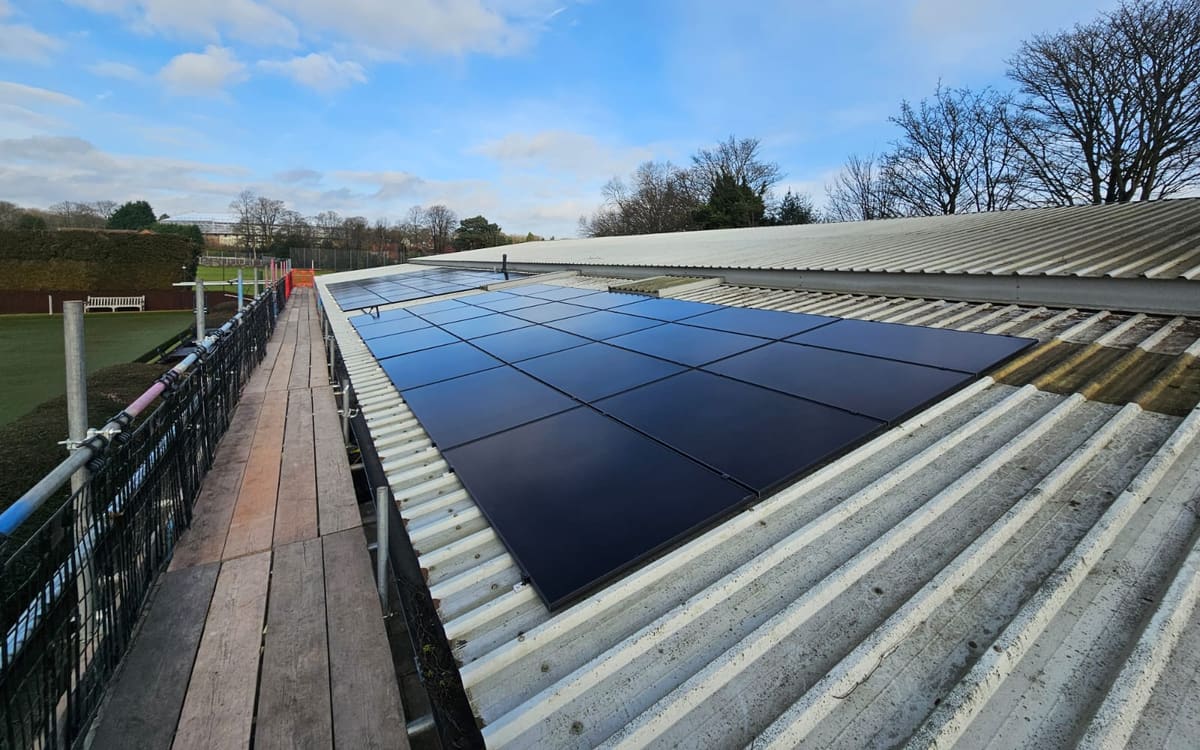
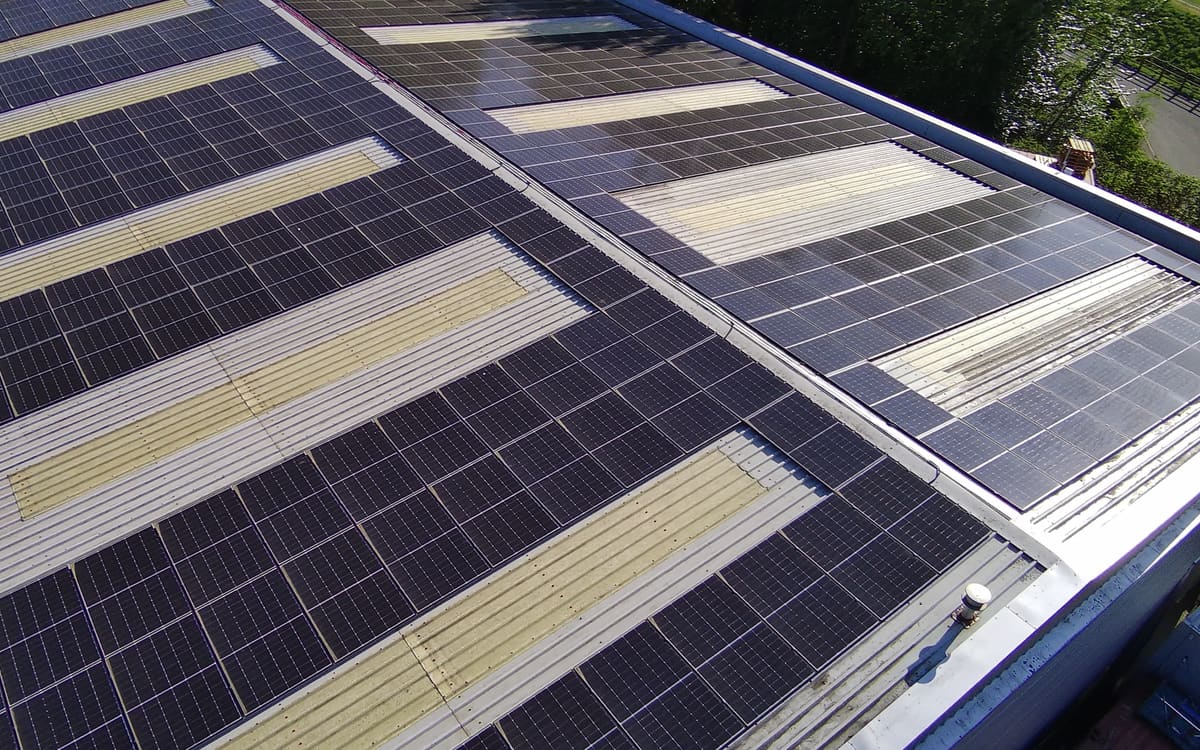
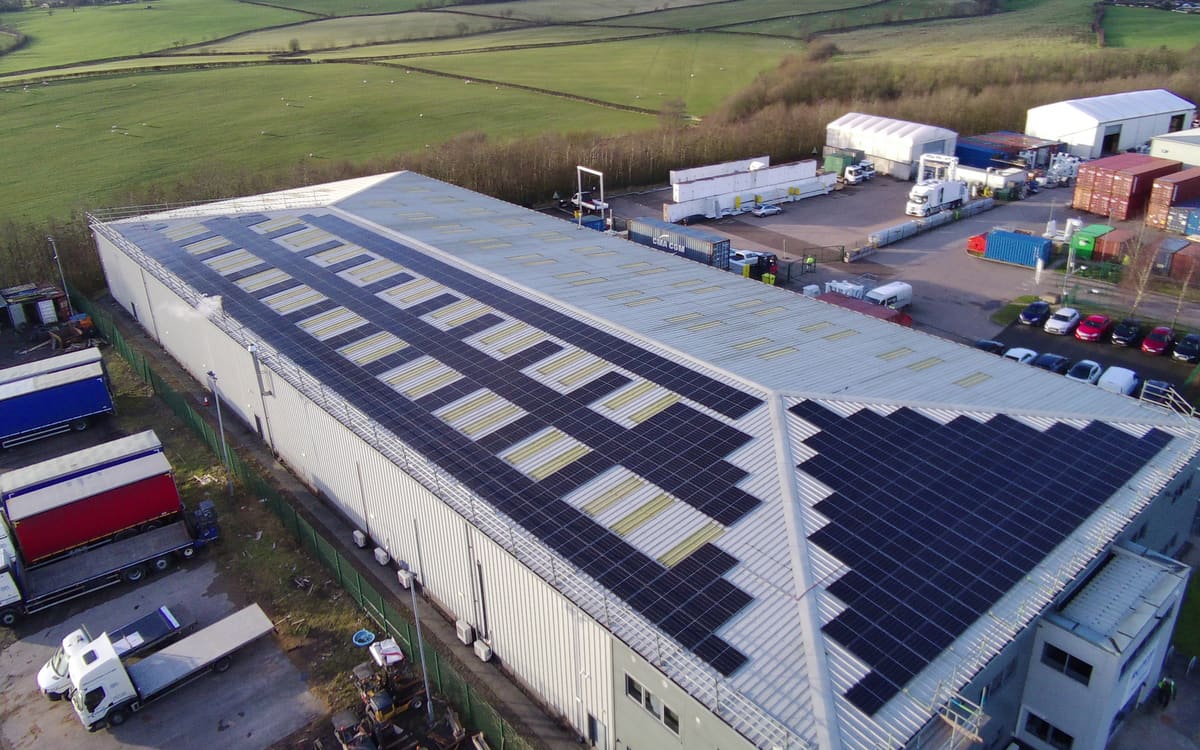
Real installs, real roofs.
We have no published glamping & leisure case study yet — so here is our actual recent work instead. Every photo on this site is a Green Tech Hub installation.
The numbers, sourced
Glamping & Leisure solar in figures
Every figure below comes from a named public source, the same standard we hold our savings estimates to.
-
UK holiday parks and campsites numbered 4,754 sites with 320,901 pitches in 2023, generating £12.2bn in visitor expenditure, £7.2bn GVA and supporting 226,745 full-time-equivalent jobs.
Source: UK Caravan and Camping Alliance, 'Pitching the Value' 2024 Economic Benefit Report (Frontline Consultants)
-
England's 34 National Landscapes (formerly AONBs) cover around 15% of the country's land area; together with the 10 National Parks, designated landscapes cover approximately 22% of England, the areas where a large share of rural glamping sites are located.
Source: National Landscapes Association / Natural England
-
Rooftop solar on non-domestic buildings in England falls under Class J permitted development, subject to a 56-day prior approval application. Amendments in force from December 2023 removed the previous 1 MW rooftop cap and permitted installation on roof slopes fronting a highway in conservation areas and National Landscapes. Listed buildings and scheduled monuments remain excluded.
Source: Town and Country Planning (General Permitted Development) (England) Order 2015, Schedule 2 Part 14 Class J, as amended 2023 (MHCLG)
-
Eligible onsite renewable generation and storage, including rooftop solar for self-consumption and battery storage serving EV charge points, is 100% exempt from business rates in England from 1 April 2022 to 31 March 2035. No application is needed; the Valuation Office Agency simply excludes the qualifying plant and machinery from the rateable value.
Source: HM Treasury Spring Statement 2022 green business rates reliefs, administered by the Valuation Office Agency
-
Solar PV is classified as special rate plant and machinery, so it is excluded from full expensing. The available routes are the Annual Investment Allowance (100% relief on up to £1m of qualifying spend per year) or, for expenditure above that limit, the 50% special-rate first-year allowance with the balance entering the special rate pool at a 6% writing-down allowance.
Source: HMRC Capital Allowances Manual / GOV.UK capital allowances guidance
-
In SEG Year 5 (April 2024 to March 2025), 443.1 GWh of low-carbon electricity export was reported under the Smart Export Guarantee, with £56.97m paid to registered installations, up from 283.1 GWh and £30.75m in Year 4. Export rates remain well below retail import prices, which is why self-consumption drives the business case.
Source: Ofgem, Smart Export Guarantee Annual Report April 2024 to March 2025
-
The average electricity price for manufacturing-sector consumers was 17.08p/kWh in Q2 2025, a 3.9% decrease on the same quarter of 2024. Small rural non-domestic supplies typically sit above this once standing and distribution charges are included.
Source: DESNZ, Quarterly Energy Prices (September 2025 edition)
-
BS 7671 Section 708 requires each pitch socket-outlet in a caravan or camping park to be rated at least 16A and individually protected by its own overcurrent device and a 30 mA RCD, with no more than four socket-outlets grouped together. Section 708 also extends to circuits supplying residential park homes.
Source: BS 7671 (IET Wiring Regulations, 18th Edition), Section 708, Electrical installations in caravan/camping parks and similar locations
-
Ofgem approved the TMO4+ grid connections reform on 15 April 2025, with the reforms going live on 10 June 2025. The regime moves from 'first come, first served' to 'first ready, first needed, first connect', reordering the connection queue, directly relevant to rural sites waiting on network capacity.
Source: Ofgem, Grid Connections Reform (TMO4+) decision, April 2025
-
Caravan sites require a site licence under the Caravan Sites and Control of Development Act 1960, with conditions drawn from Model Standards issued under section 5(6) of that Act. Certain temporary recreational uses of land are permitted for up to 28 days in a calendar year under Part 4 permitted development rights.
Source: Caravan Sites and Control of Development Act 1960 (legislation.gov.uk); MHCLG Model Standards
Data last reviewed: July 2026
The next step
If you run a glamping site, holiday park or rural leisure business and the electrical supply is what is holding your site plan back, the starting point is data rather than a quote. Green Tech Hub offers a free Business Energy Survey: we analyse your half-hourly consumption to see how much of your summer demand solar could genuinely displace, assess the amenity block, barn and any available land for a viable array, check your site's planning and licensing position, and model a battery against your DNO reinforcement quote so you can see which route is actually cheaper. You get a director-led design with in-house CAD roof layouts, an independently audited install, an MCS-certified system (NIC-600049) and honest numbers, including the cases where the answer is smaller than you hoped. Call 0121 661 6400 or book your free Business Energy Survey.
Glamping & Leisure solar questions
Can solar realistically run hot tubs and a shower block on a glamping site?
It can cover a substantial share of them in the season, but be careful how the question is framed. A hot tub held at temperature is a continuous, round-the-clock load, so a good proportion of its demand falls in daylight hours when the array is producing. That is genuinely well matched. Shower blocks are different: demand concentrates into a morning and an evening peak, and the evening peak needs battery storage to be served from solar rather than from the grid. In practice, on a busy summer site with an appropriately sized array and battery, we would expect solar to displace a large share of daytime and early-evening consumption. It will not run the site in isolation in December, and any installer telling you otherwise is selling rather than designing. The honest measure is a half-hourly consumption survey, where we model your actual demand against modelled generation before quoting a figure.
Do I need planning permission for solar if my site is in a National Landscape or National Park?
It depends entirely on whether the panels go on a roof or on the ground. Rooftop solar on a non-domestic building. Your amenity block, barn, reception or workshop: is generally permitted development under Class J of the GPDO, subject to a 56-day prior approval application to the local planning authority, and since the December 2023 amendments that now includes roof slopes facing a highway in designated landscapes. However, permitted development does not apply to listed buildings or scheduled monuments, which excludes many converted rural outbuildings. Ground-mounted arrays of any meaningful size need full planning permission, and in a National Landscape or National Park the authority has a statutory duty to conserve natural beauty, so expect to submit a landscape and visual appraisal and to accept screening or siting conditions. Allow three to six months for a ground-mount consent in a designated area.
Should I go fully off-grid, or stay grid-connected with a battery?
For the overwhelming majority of sites, grid-connected hybrid is the better commercial answer. Going fully off-grid means sizing your system to cover the worst week of December rather than a typical week of July, which means dramatically oversizing both the array and the battery, and usually keeping a generator for backup. The capital cost rises far faster than the benefit. There are exceptions: a genuinely remote site facing a very large DNO reinforcement quote, or one with no viable connection at all, may find off-grid or near-off-grid cheaper than the alternative. That is a numbers exercise rather than a philosophy, and we will run both cases side by side, including the DNO quote, before recommending either.
My supply is already at capacity. Does solar help, or do I still need a grid upgrade?
Solar plus battery frequently removes the need for an upgrade, which is often the single largest financial benefit on a rural leisure site. The constraint you are hitting is peak demand, not annual consumption, six hot tubs, a shower block and an EV charger all drawing at 7pm. A battery serves that peak from stored generation rather than from the incoming supply, effectively adding capacity behind the meter. It is not a universal fix: if your peak is genuinely sustained for many hours, or you are adding rapid EV charging, you may still need network capacity. But we would always model the battery-as-capacity option against the DNO quote first, because avoiding a five-figure reinforcement charge often does more for payback than the generation itself.
What payback should a glamping or holiday park expect?
Commercial solar in the West Midlands typically pays back in three to five years, and a well-oriented roof will produce around 900 to 1,000 kWh per kWp per year. Seasonal leisure sites tend to sit toward the longer end of that range rather than the shorter end, and it is important to understand why: a site closed from November to February exports or curtails its winter generation, and exported units earn far less than the units you avoid buying. What pulls it back the other way is the strong summer alignment between hot-tub and amenity demand and peak solar output. Business rates exemption on eligible onsite generation to 31 March 2035, and capital allowances via the Annual Investment Allowance, both improve the after-tax position. We will not quote a payback figure before we have your half-hourly data.
Can the work be done without closing the site or disrupting guests?
It should be scheduled for the closed season, and we plan it that way as standard. Scaffolding on an amenity block, trenching for cable routes between buildings, switchgear changeovers and DNO witness testing are all disruptive in a way that does not sit well with a full site in August. For a park with several buildings, a staged rollout across two or three closed seasons is usually better than one large programme. It spreads the capital, lets you measure real performance before committing to phase two, and keeps disruption inside the shutdown window. Where an in-season element is genuinely unavoidable, we sequence it around a quiet midweek period and agree the working areas with you in advance.
Other sectors we serve
-
Community Buildings & Places of Worship
Seven-day, irregular usage where solar plus storage cuts running costs for good.
-
Schools & Education
Term-time weekday load, holiday surplus, and a live feed the curriculum can use.
-
Warehouses & Logistics
Large unshaded roof spans and daytime machinery load, the fastest payback in commercial solar.
Get the numbers for your glamping & leisure site
Get your free, no-obligation quote
Commercial solar, battery, EV or any electrical work — no pressure.