
Commercial Solar · Farms & Agriculture
Solar Panels for Farms and Agricultural Buildings
Farming's electricity bill is rarely where people expect it. The tractor fleet runs on red diesel, but the grain store fans, the continuous-flow dryer's augers and conveyors, the dairy's plate cooler and vacuum pump, the poultry shed's ventilation, the borehole and irrigation pumps, the workshop compressor and the cold store all run on a meter, and on a rural three-phase supply that is often the most expensive electricity anyone on the holding buys. Defra's Farm Business Survey now records 27% of English farm businesses generating solar energy, making it the second most common diversification after letting buildings, and the reason is straightforward: the load is real, it is daytime-weighted, and the roofs are already there.
Agricultural buildings are, structurally, close to an ideal solar host. Steel portal frames give long uninterrupted spans with no plant, no rooflights every third bay in the newer sheds, no surrounding tower blocks casting shade, and a shallow 10–15° pitch that suits framed mounting. A 60m grain store or a modern cubicle shed can carry 200–400 kWp on a single roof plane, with the inverters and switchgear sited at ground level in a lockable bay a few metres from the main distribution board. That combination: big simple roof, short cable runs, high daytime demand, is exactly what makes commercial solar pay faster on a farm than on a fragmented urban roof.
Green Tech Hub has designed and delivered over 100 MW of commercial solar from our base in Oldbury, working across Birmingham, Worcestershire, Staffordshire, Shropshire and the wider West Midlands. Every farm project starts the same way: a half-hourly consumption survey pulled from your supply, not a guess from your annual kWh; an in-house CAD roof layout; and a director on site who has actually looked at the purlins. We are MCS-certified (NIC-600049), RECC-registered and NICEIC-approved, and every install is independently audited before handover.
Farm roofs on the rural fringe of the conurbation share their network operator and much of their economics with the city sites described on our commercial solar Birmingham page.
Why solar works on farms & agriculture
The economics of farm solar are driven almost entirely by self-consumption, not export. A unit you generate and use on site displaces the full delivered price of imported electricity: commodity, network charges, policy levies and VAT, whereas a unit exported under a Smart Export Guarantee tariff earns a fraction of that. On a well-oriented West Midlands roof you should budget on roughly 900–1,000 kWh per installed kWp per year. Sized correctly against a real half-hourly profile, that typically lands a farm system at a three-to-five-year simple payback. Size it against a headline annual figure instead and you build an export machine that never pays back.
What makes farms different from a factory or a warehouse is that the load profile varies enormously by enterprise, and the design has to follow it. Arable holdings have their sharpest electrical demand in August and September: aeration fans, conveyors, cleaners and cold-store pull-down during and after harvest, which lands squarely on the two best solar months of the year, giving near-total self-consumption exactly when generation peaks. Poultry and pig units with mechanical ventilation are even better matched: fan demand rises with ambient temperature, so the hottest, brightest hours are also the highest-load hours. Dairies are the awkward case. Milking is twice daily at the shoulders of the solar curve, and the biggest single load, milk cooling, hits immediately after each milking. Solar still works well on a dairy, but it works properly only when paired with something that shifts energy: a plate cooler and pre-cooling, a variable-speed vacuum pump, immersion diversion into the wash-water cylinder, or battery storage sized to carry the array through the evening milking.
The roofs themselves lower the cost per kWp. Modern steel-portal sheds have consistent purlin spacing, generous spans and no obstructions, so a single mounting detail repeats across the whole roof and installation is quick. Where a barn runs east–west with two large slopes, splitting the array across both faces flattens the generation curve, less midday peak, more morning and late-afternoon output, which on a farm with early and late working is usually worth more than the small annual yield penalty. Our own Harris Parts project is not a farm, but it is instructive: a 154 kWp array with 64 kWh of battery storage on a single large steel-portal warehouse roof, sized to the occupier's real daytime load and documented to return its cost in five years and four months. The roof geometry is the same one you have over your grain store.
On the funding side, solar PV is special rate plant, so it is excluded from full expensing, but the Annual Investment Allowance still gives 100% relief on up to £1m of qualifying spend, and companies above that threshold can use the 50% special-rate first-year allowance. Onsite generation and storage is also exempt from business rates in England to 31 March 2035, so an array serving your own consumption does not push up the rateable value of the holding. For schemes above 100 kW we can arrange fully funded and PPA structures where the capital sits with a funder rather than the farm balance sheet, useful if machinery replacement or a shed build is already competing for the same money. Our finance options page sets out how each route works.
What to weigh up first
Asbestos-cement roofs are a hard stop, not an obstacle to work around. A very large share of farm buildings put up between the 1950s and the mid-1980s are sheeted in corrugated fibre cement containing asbestos. You cannot fix a solar mounting system into it. Drilling releases fibres, it is a licensed activity, and the sheet has no reliable residual strength, HSE is blunt that in agriculture roughly half the deaths and serious injuries caused by falls involve work on fragile roofs, with fibre cement named among the materials that shatter without warning. There are only three honest answers: strip and re-sheet the building (which is a real cost, typically comparable to a meaningful share of the PV spend, plus licensed removal and hazardous waste disposal), put the array on a different, sound building, or go to ground-mount. Any contractor who offers to "fix through" an asbestos roof, or who quotes without having established the sheet type, should be shown the gate.
Structural evidence for farm buildings is usually missing, and roof life rarely matches panel life. As-built drawings for a shed erected in 1994 by a local fabricator generally do not exist, so purlin section, gauge, spacing and fixing condition have to be established by survey and appraised against the additional dead load plus wind uplift and snow. Older box-profile steel with corroded crown fixings is common and can be a bigger problem than the frame itself. Just as important: panels carry a 25-year performance warranty, so putting them on cladding with ten years left simply guarantees you pay twice, once for the PV and again to strip, re-sheet and reinstate it. Where roof condition is marginal, re-sheeting first and mounting afterwards is usually cheaper over the life of the asset than the reverse, and we will say so even when it delays the project.
Rural grid connections are the most common reason a farm scheme gets cut down or delayed. Many holdings sit at the far end of a long overhead spur off a small pole-mounted transformer, sometimes with only a modest three-phase capacity and occasionally still on single phase. That produces voltage-rise limits and genuine export headroom problems. Any system above the G98 threshold needs a G99 application to the DNO before installation, the study can take several months on a constrained rural feeder, and the offer may come back with an export limit well below system capacity, or zero export. That is survivable, and often barely affects the business case, because self-consumption is where the value is anyway; but it must be established before design freeze, not after. Ground-mount and larger schemes on constrained networks should be planned on a twelve-to-twenty-four-month horizon, not a twelve-week one.
Consent, wildlife and day-to-day operations all need checking early. Roof-mounted solar on agricultural buildings in England is generally permitted development under Part 14, Class J of the GPDO, the 1 MW cap was removed in December 2023, but prior approval from the local planning authority is still required, and permitted development does not apply within the curtilage of a listed farmhouse or to a scheduled monument. Farm-scale ground-mount is a different matter entirely: standalone solar is only permitted development up to 9m², so anything meaningful needs full planning permission, and planning authorities will expect you to justify using lower-grade land rather than best and most versatile agricultural land. Older stone and timber barns frequently host bats and barn owls, both legally protected, which can mean an ecology survey with a seasonal window that constrains when work can start. Finally, be realistic about the site: dust from grain handling and ammonia in livestock sheds will soil modules faster than a clean industrial roof and needs building into a maintenance plan; rodents in barns will chew unprotected DC cabling if it is not run in conduit; and scaffolding a shed during harvest, calving or housing is not going to happen, so the programme has to be built around your calendar, not ours.
Proof
Real installs, real roofs.
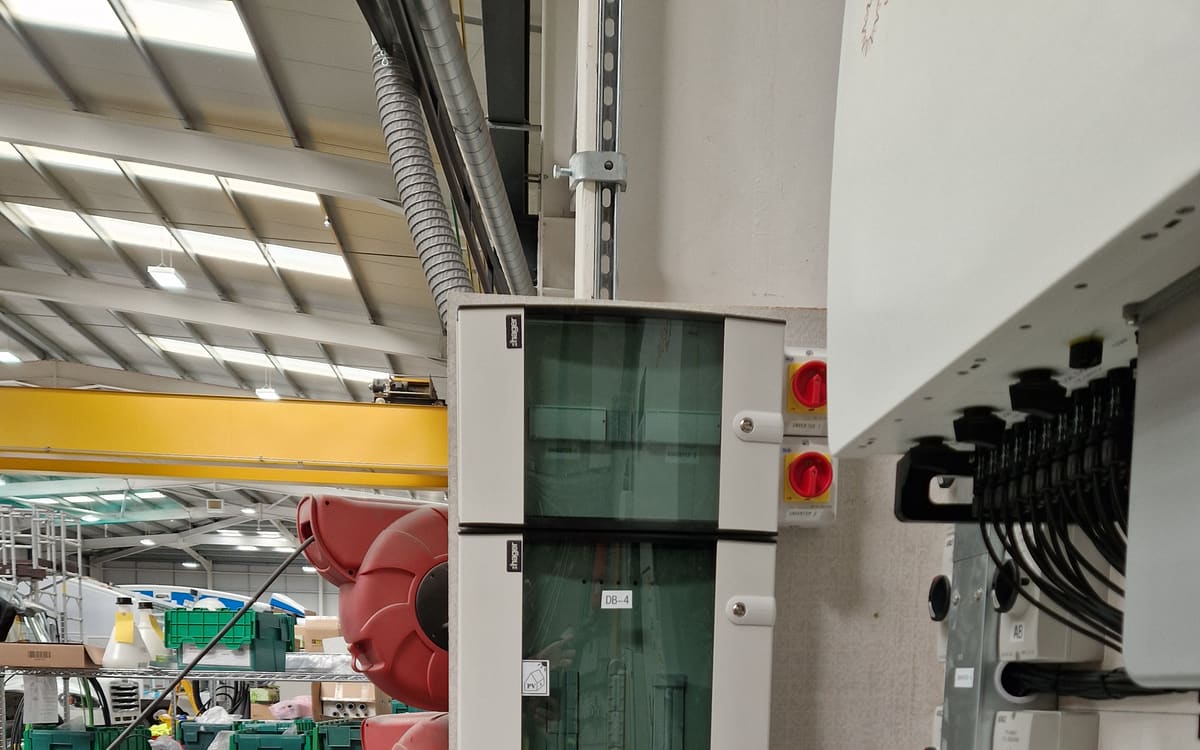
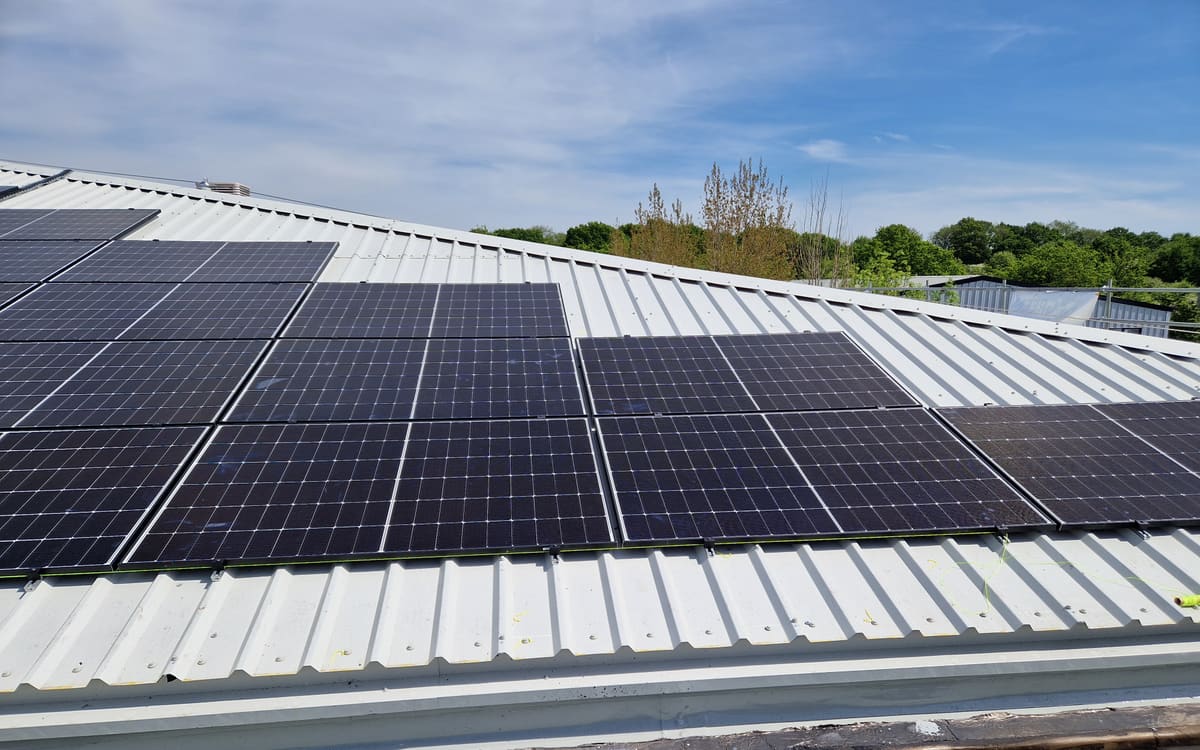
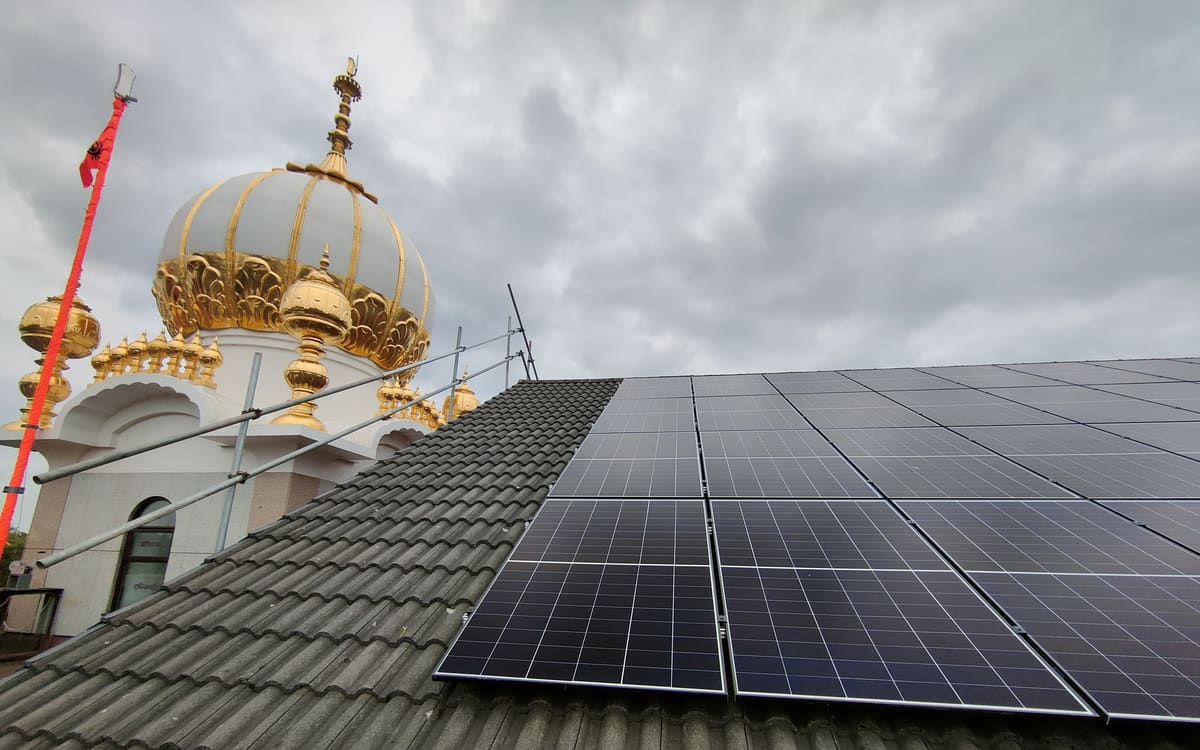
We have no published farms & agriculture case study yet — so here is our actual recent work instead. Every photo on this site is a Green Tech Hub installation.
The numbers, sourced
Farms & Agriculture solar in figures
Every figure below comes from a named public source, the same standard we hold our savings estimates to.
-
27% of farm businesses in England generated solar energy in 2024/25, the second most common form of diversification, up from 14% in 2014/15. Letting out buildings remains first at 50%.
Source: Defra, Farm Business Survey / Farm Accounts in England (gov.uk)
-
Income from diversified activities averaged £22,400 per farm in the year ending 28 February 2025, up 21% year on year and accounting for around 31% of total farm business income.
Source: Defra, Farm Business Income statistics for England 2024/25 (gov.uk)
-
"In agriculture, roughly half the deaths and serious injuries caused by falls involve work on fragile roofs." HSE names fibre cement sheets, commonly called asbestos cement, among materials that will not support a person's weight and can shatter without warning.
Source: Health and Safety Executive, 'Falls through fragile roofs' (hse.gov.uk/agriculture)
-
Milk cooling, water heating and vacuum pumping account for over 80% of electricity use on a typical dairy farm, cooling around 38%, water heating around 31% and the vacuum pump around 20%.
Source: AHDB, dairy energy efficiency knowledge library
-
AHDB benchmarking puts average-to-high dairy electricity use at 400–600 kWh per cow per year, with the lowest users nearer 250–300 kWh per cow per year.
Source: AHDB, 'Introduction to electricity use and management on dairy farms'
-
The 1 MW capacity cap on solar under Part 14, Class J of the GPDO was removed on 21 December 2023, so rooftop solar on agricultural and other non-domestic buildings in England is generally permitted development, though prior approval from the local planning authority is still required, and listed buildings and scheduled monuments are excluded.
Source: The Town and Country Planning (General Permitted Development etc.) (England) (Amendment) (No. 2) Order 2023; CLA briefing on amendments to PD rights for solar
-
Eligible onsite renewable generation and storage in England is 100% exempt from business rates from 1 April 2022 until 31 March 2035; the Valuation Office Agency simply omits qualifying plant from the rateable value, so no application is needed.
Source: HM Treasury, Spring Statement 2022 green business rates reliefs; Valuation Office Agency
-
Solar PV is special rate plant and is therefore excluded from full expensing. The available routes are the 50% special-rate first-year allowance for companies, or the Annual Investment Allowance at 100% on up to £1m of qualifying expenditure.
Source: HMRC Capital Allowances Manual and gov.uk full expensing / capital allowances guidance
-
AHDB's grain drying calculator assumes 1.20 litres of gas oil per tonne of grain for each 1% of moisture removed: a reminder that drying heat is a fuel cost, while the fans, augers, conveyors and cleaners around it are the electrical load solar actually displaces.
Source: AHDB Farm Economics grain drying cost analysis
Data last reviewed: July 2026
The next step
If you farm in Birmingham, the Black Country or the wider West Midlands and want to know whether solar genuinely stacks up on your buildings, book a free Business Energy Survey. A director will visit the holding, pull and analyse your half-hourly consumption data rather than estimating from an annual figure, establish the roof construction: including whether you are dealing with asbestos cement. Check your supply and likely DNO position, and produce an in-house CAD layout with a costed, honest payback. If the answer is that you should re-sheet first, use a different building, or wait for a grid answer, we will tell you that. Call 0121 661 6400 or request a survey and we will arrange a visit around your harvest, calving or housing calendar.
Farms & Agriculture solar questions
Can we put solar panels on an asbestos-cement barn roof?
No, not by fixing into it. Corrugated fibre cement containing asbestos is a fragile material with no reliable residual strength, and drilling it is a licensed activity that releases fibres. HSE guidance is that roughly half of all deaths and serious injuries from falls in agriculture involve fragile roofs. There are three legitimate options. First, strip and re-sheet the building with new profiled steel and mount the array on that. This is a genuine additional cost including licensed removal and hazardous waste disposal, but it also renews the building. Second, use a different, structurally sound building on the holding. Third, go to ground-mount. We will establish the sheet type at survey stage and tell you which of these actually stacks up before you spend anything.
Rooftop or ground-mount, which is right for a farm?
Rooftop wins on cost and consent wherever you have a sound, well-oriented shed with enough area. It uses land you have already covered, needs no separate planning application in most cases, and puts the generation next to the load. Ground-mount becomes the right answer when the only large roofs are asbestos or structurally marginal, when you need considerably more capacity than the roofs can carry, or when the buildings face badly. The trade-off is consent and time: standalone solar is only permitted development up to 9 square metres, so a farm-scale ground array needs full planning permission, and authorities will expect justification for using lower-grade land rather than best and most versatile agricultural land. Ground-mount also takes land out of production and usually involves a longer grid connection process.
Do we need planning permission for solar on our farm buildings?
For roof-mounted solar on an agricultural building in England, usually not in the conventional sense. It generally falls under permitted development, Part 14 Class J of the GPDO, and the 1 MW capacity cap was removed in December 2023. However, prior approval from the local planning authority is still required before you start, there are protrusion and edge-clearance limits the design must respect, and permitted development does not apply within the curtilage of a listed farmhouse or to a scheduled monument. Separately, if the building is an older stone or timber barn, protected species, particularly bats and barn owls, may require an ecology survey with a seasonal window, which is often the real constraint on the start date rather than planning itself.
Our grid connection is weak. Will the DNO actually let us install solar?
Almost always yes, but often with an export limit. Rural holdings frequently sit at the end of a long overhead spur from a small transformer, which creates voltage-rise and export headroom constraints. Anything above the small-scale G98 threshold requires a G99 application to the distribution network operator, and on a constrained rural feeder the study can take several months. The offer may come back capped well below your system size, or as zero export. In practice that rarely wrecks the case, because the value in farm solar is in self-consumption rather than export, a unit you use is worth several times a unit you sell under the Smart Export Guarantee. The important thing is that we make the G99 application and know the answer before the design is fixed and equipment is ordered.
Does solar really pay on a dairy when milking is early morning and evening?
It pays, but it needs designing differently from an arable or workshop scheme. Milking sits at the shoulders of the solar curve, and cooling, the largest single electrical load, at around 38% of dairy electricity per AHDB, hits immediately after each milking. Three things fix the mismatch. Splitting the array east–west across a barn's two roof slopes shifts output into the morning and late afternoon. Diverting surplus into the wash-water cylinder converts midday generation into the hot water you would otherwise buy. And battery storage carries the array through the evening milking. There is also a lot of low-cost efficiency work worth doing first: pre-cooling with a plate cooler and fitting a variable-speed drive to the vacuum pump both cut the load solar has to cover, which usually means a smaller and better-paying system.
What tax relief and rates treatment applies to farm solar?
Solar PV is treated as special rate plant, so it does not qualify for full expensing, be careful of anyone claiming otherwise. The routes that do apply are the Annual Investment Allowance, which gives 100% relief on up to £1m of qualifying expenditure, and for companies the 50% special-rate first-year allowance on spend above that, with the balance going into the special rate pool. On business rates, eligible onsite renewable generation and storage in England is exempt to 31 March 2035, and the Valuation Office Agency applies this by omitting qualifying plant from the rateable value, so there is nothing to claim. Note also that the domestic zero rate of VAT does not apply to commercial or agricultural premises. Your accountant should confirm the position for your specific structure.
Other sectors we serve
-
Poultry Farms
Ventilation, heating and lighting run right through daylight, exceptional self-consumption.
-
Offices & Business Parks
A weekday nine-to-five load that matches generation almost hour for hour.
-
Student Accommodation
All-inclusive bills mean every kWh generated lands straight on the operator's P&L.
Get the numbers for your farms & agriculture site
Get your free, no-obligation quote
Commercial solar, battery, EV or any electrical work — no pressure.