
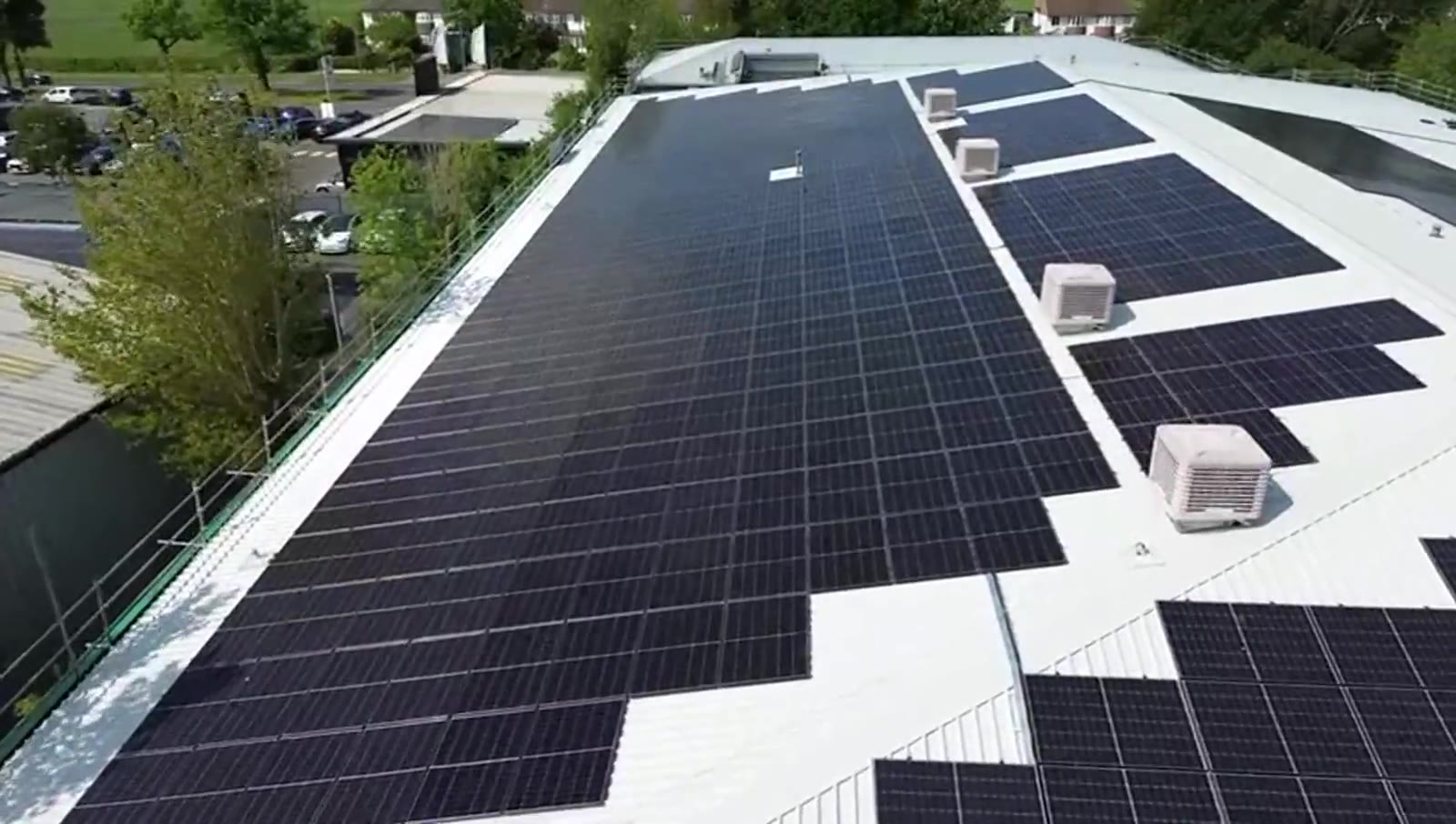
Commercial Solar · Student Accommodation
Solar Panels for Student Accommodation
Purpose-built student accommodation is one of the few asset classes where the operator, not the occupier, pays for every kilowatt-hour the building burns. All-inclusive rent is the sector's standard product: heat, power, hot water and Wi-Fi bundled into a single weekly figure agreed nine to twelve months before the resident moves in. That makes energy a fixed liability against a fixed income. When wholesale prices moved in 2022, PBSA operators could not reprice mid-tenancy, and rents are now bounded at the top by what the maintenance loan will stretch to. Energy is one of the very few controllable lines left on a PBSA P&L, and it is the only one where capital investment permanently removes cost rather than deferring it.
The buildings themselves are unusually well suited to solar, for reasons that have nothing to do with the roof being big. A student block's landlord supply is a broad, flat, all-year electrical base load: lifts, corridor and stairwell lighting running 24/7, ventilation plant, hot water circulation and keep-warm, laundry, gym, cinema room, study spaces, reception, CCTV, door access and comms rooms. It is half-hourly metered, it sits behind one or two supply points, and it barely moves between term and vacation. That flatness is what makes on-site generation valuable: almost every unit produced during daylight hours is consumed on site rather than exported, and a self-consumed unit is worth the full delivered rate you pay, not the export rate you receive.
What solar will not do on this asset class is get you anywhere near net zero from the roof alone. A twenty-storey block has a large amount of building and a small amount of roof, and much of that roof is already occupied by air handling units, lift overruns, flues, fall-arrest posts and often an amenity terrace. Sized honestly against the landlord supply, rooftop PV on a city-centre tower is a base-load shaver, a permanent single-digit-to-teens percentage reduction in a bill that recurs every year for twenty-five. On a lower-rise campus block, a converted mill or a suburban cluster scheme with a wide flat roof, the numbers get considerably better. We measure before we promise. See how we approach commercial solar across the West Midlands.
Student blocks with car parks often pair rooftop solar with charging; see EV charger installation Birmingham for how we design the two together.
Why solar works on student accommodation
The economics of student accommodation solar are decided by one question asked early: what sits behind the landlord meter? In a block with all-inclusive bills and communal heat, effectively the whole building does: bedroom sockets, showers, cooking and lighting included, and the array is competing against the full retail unit rate on a very large consumption. Where rooms are individually metered to residents (rarer in modern PBSA, common in older converted stock and some university-owned halls), only the communal and plant load is yours, and the array must be sized to that smaller number or you will export the surplus for a fraction of its worth. Getting this wrong is the single most common reason a student accommodation solar business case underdelivers. We establish it from your actual half-hourly supply data before any design work starts, not from an annual kWh total on a bill.
Domestic hot water is the lever that separates a good scheme from an average one here. Showers are the largest single load in a student block and they cluster hard into a morning peak and a late-evening peak, precisely when the panels are not producing. If the block generates hot water electrically, via immersion or a heat pump feeding calorifiers, then shifting cylinder reheat into the 11:00–15:00 window turns midday generation into stored hot water at no additional capital cost. The same applies to laundry: moving the machines' duty cycle into daylight hours is a controls change, not a construction project. Between them these two measures can lift the self-consumption ratio materially: and self-consumption ratio, not array size, is what drives payback in this sector.
Battery storage does the rest of the work, and it earns its keep differently in student accommodation than in a factory or a warehouse. In term time, the battery bridges midday generation to the evening shower and cooking peak. Out of term, when the block is at low occupancy but the roof is at maximum output, it soaks up the summer surplus that would otherwise export at a poor rate and releases it into the residual base load that never stops: lifts, ventilation, comms, security and keep-warm. It also gives an operator selling a fixed all-inclusive product something it genuinely values: a measure of insulation from evening peak pricing. Our approach to sizing is set out under solar and battery storage.
Tenure is the final piece, and it favours this sector. Student accommodation is overwhelmingly held long-term by institutional owners, REITs, funds and university estates with twenty-five to thirty year horizons, which matches a 25-year panel performance warranty far better than a typical five-year commercial lease does. On-site renewable generation and storage is also exempt from business rates in England until 31 March 2035, so the array does not increase the rateable value of the block. And for schemes above 100 kW, fully funded and PPA structures are available where the capital sits off your balance sheet and you buy the generated units at a rate below grid, useful where the asset sits in a fund with a constrained capex allocation. We set out the routes under solar financing.
What to weigh up first
Roof area is the binding constraint and it is worth doing the arithmetic before anyone gets excited. A 400-bed city-centre block on a 700 m² footprint might, after air handling plant, lift overruns, flues, rooflights, fall-arrest provision and edge exclusion zones, offer 300–400 m² of genuinely usable array space. At West Midlands yields of roughly 900–1,000 kWh per kWp per year on a well-oriented roof, that is somewhere around 55,000–75,000 kWh annually: real money, and a permanent saving, but a modest fraction of a landlord supply that can run to several hundred megawatt-hours. If a contractor quotes you a percentage offset before they have been on the roof with a tape measure and a copy of your plant layout, treat the number as marketing. Facade-mounted PV is not the way round it either: student accommodation with a storey 18 m or more above ground level is expressly within scope of the ban on combustible materials in external walls, which in practice takes cladding-integrated PV off the table on most tall blocks.
Structure and fire strategy need resolving early, and on this building type they are not formalities. Tall, slender blocks sit in a severe wind-loading environment, and a ballasted system that works perfectly well on a two-storey warehouse may need substantially more ballast or mechanical fixing at eighteen storeys: against frames, including light-gauge steel and volumetric modular construction, that were often designed with very little spare roof capacity. Penetrating a single-ply membrane will engage the roofing warranty, so the manufacturer needs bringing into the conversation before design freeze, not after. And the DC side has to be routed without compromising protected escape routes in a building full of sleeping residents; expect your fire engineer and your Building Safety Act obligations to shape cable routes, isolation strategy and firefighter switch arrangements. None of this stops a scheme. All of it costs time and money if it surfaces late.
Do not assume permitted development. Class J of the GPDO, the class that lost its 1 MW rooftop cap in late 2023: expressly does not apply to a dwellinghouse or a block of flats, so whether the permitted development route is open at all depends on the planning use class your block was consented under, and many city-centre PBSA consents strip permitted development rights by condition in any case. Add a listed building or a Birmingham city-centre conservation area and the route generally closes. Budget for a full planning application on programme rather than treating it as a contingency. Consent is layered too: freeholder, lender, forward-funder and, where a university nomination agreement is in place, the institution as well. On EPC and MEES, note that PBSA sits awkwardly, cluster flats and studios with their own facilities typically attract domestic EPCs while halls with shared facilities attract non-domestic ones, so the regime that actually bites needs checking building by building. Solar improves the rating in both, but usually less than fabric or heating measures do.
Finally, programme and seasonality. The only realistic installation window on an occupied student block is the summer vacation, roughly mid-June to early September: which is the same window as every turnaround, redecoration, re-carpeting and refurbishment programme in the sector, and increasingly the same window as summer conference and short-let income you may not want to disturb. In a city centre that also means crane or hoist access, traffic management permits and neighbour notification, all with their own lead times. Be realistic about year one as well: summer is peak generation and lowest occupancy, so the measured saving in your first twelve months will not match a model built on annual consumption totals. It will match a model built on half-hourly landlord data, which is exactly why we insist on that data before quoting, and why we would rather tell you a particular block is marginal than sell you an array that disappoints.
Proof
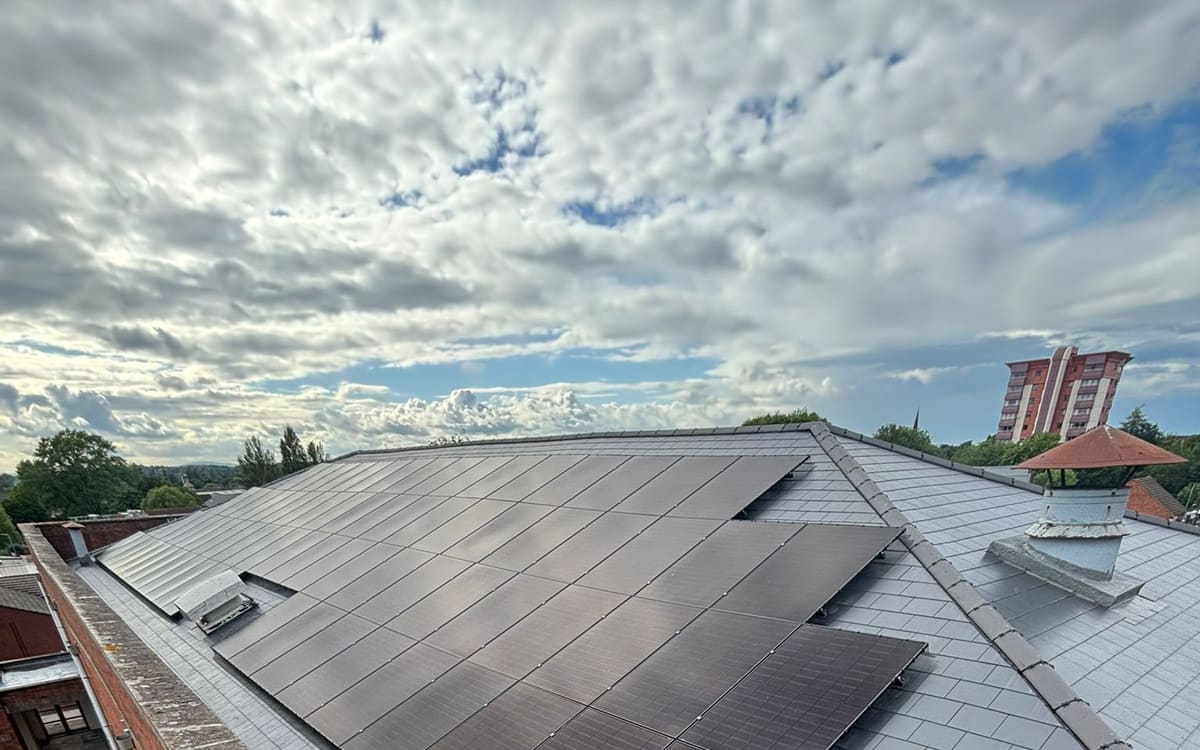
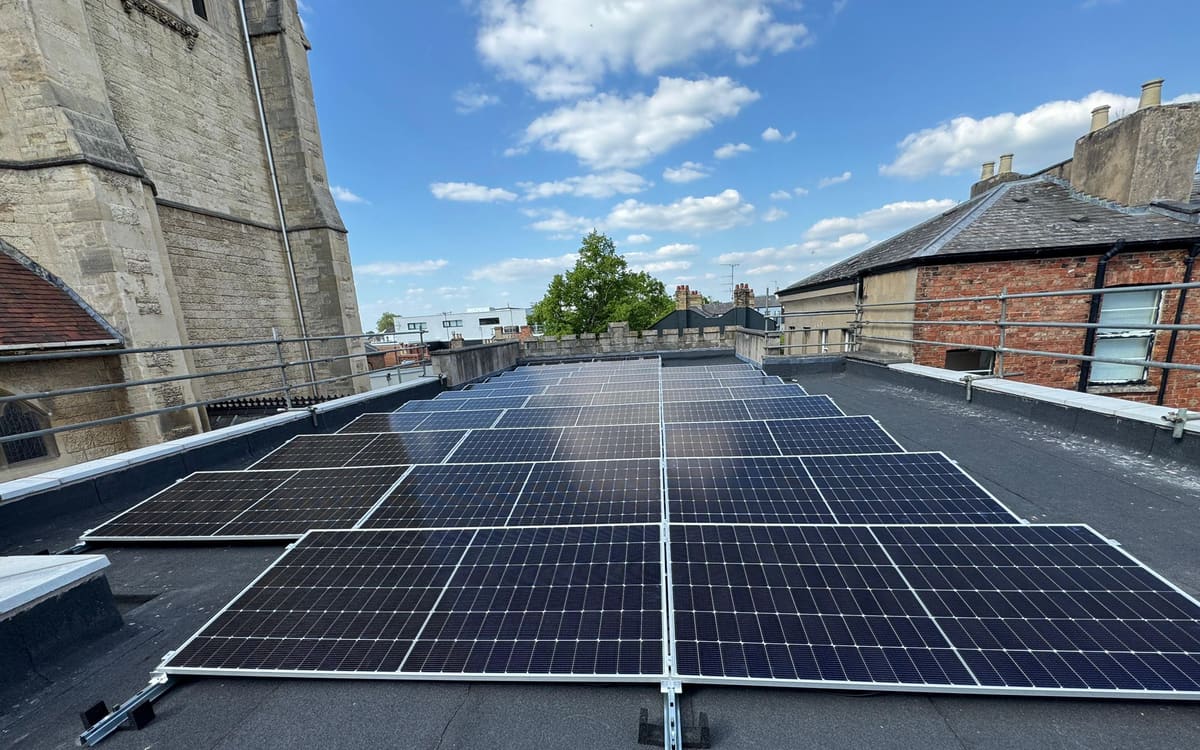
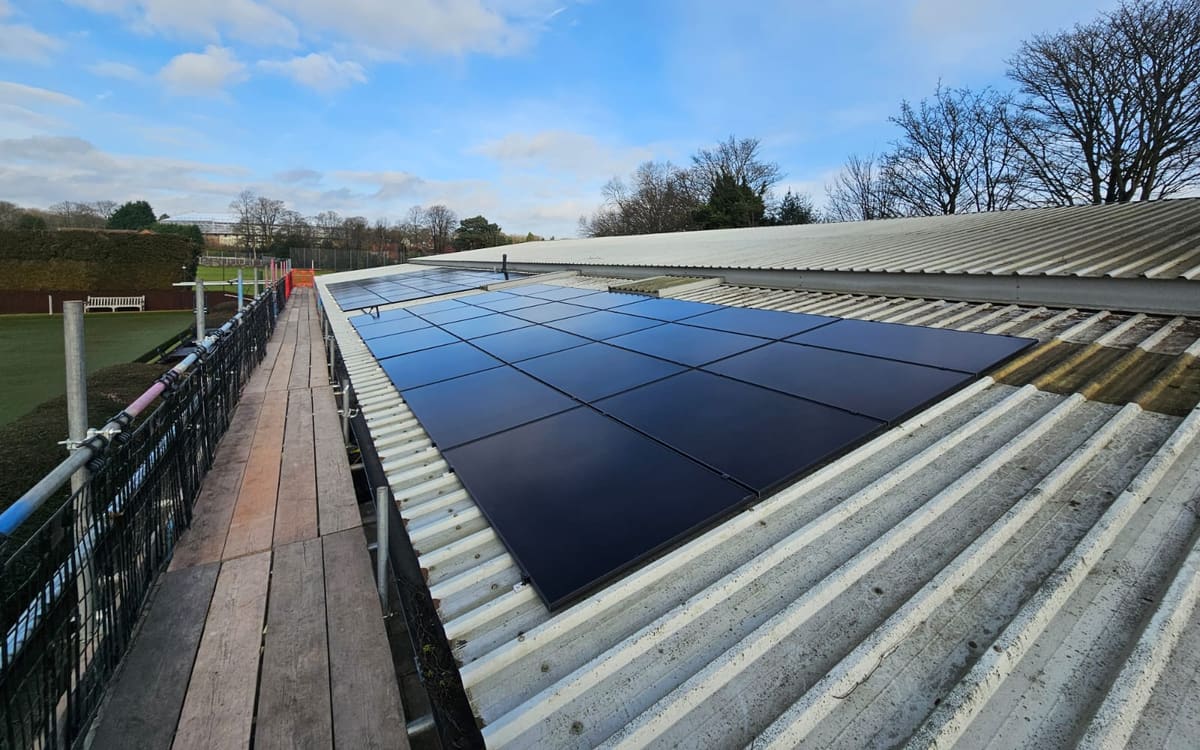
Real installs, real roofs.
We have no published student accommodation case study yet — so here is our actual recent work instead. Every photo on this site is a Green Tech Hub installation.
The numbers, sourced
Student Accommodation solar in figures
Every figure below comes from a named public source, the same standard we hold our savings estimates to.
-
UK higher education enrolments totalled 2,863,180 in 2024/25, a 1% fall from 2,900,240 the previous year, the demand base against which most PBSA blocks were underwritten.
Source: HESA, Higher Education Student Statistics: UK, 2024/25 (SB273, published 27 January 2026)
-
PBSA occupancy averaged 85.4% in October 2025, down 5.4 percentage points year on year, against a pre-Covid norm of 95–98%, squeezing operator margins on a rent that is fixed and all-inclusive.
Source: StuRents Occupancy Update, October 2025, cited by the Higher Education Policy Institute (HEPI), April 2026
-
Birmingham City Council estimates demand for 47,434 bed spaces arising from the city's five main universities, making the West Midlands one of the largest regional PBSA markets in the UK.
Source: Birmingham City Council, Purpose Built Student Accommodation: Supply and Demand Update
-
Eligible on-site renewable generation and storage plant, including rooftop solar PV and batteries, is exempt from business rates in England from 1 April 2022 to 31 March 2035. No application is required; the Valuation Office Agency excludes qualifying plant when the property is valued.
Source: GOV.UK / Valuation Office Agency, business rates exemption for eligible on-site renewable plant and machinery in England, announced at Spring Statement 2022
-
The Government's interim response of 18 June 2026 confirmed that privately rented non-domestic buildings over 1,000 m² in England and Wales must reach EPC B, where cost effective, by 2031. The previously proposed EPC C milestone for 2027 will not be implemented, buildings under 1,000 m² remain at the EPC E minimum, and the 7-year payback test and existing exemptions are retained.
Source: GOV.UK, 'Minimum Energy Efficiency Standards (MEES) in the non-domestic private rented sector: interim response', updated 18 June 2026
-
The 1 MW generation cap on rooftop solar under permitted development was removed for non-domestic buildings from December 2023: but Class J of Part 14 expressly does not apply to a dwellinghouse or a block of flats, and a 56-day prior approval application is still required covering design, external appearance and glare.
Source: The Town and Country Planning (General Permitted Development etc.) (England) (Amendment) (No. 2) Order 2023, SI 2023/1279, legislation.gov.uk
-
Regulation 7(2) of the Building Regulations applies to any building with a storey at least 18 m above ground level containing one or more dwellings, an institution, or a room for residential purposes, student accommodation is expressly within scope, requiring materials in external walls and specified attachments to achieve class A2-s1,d0 or class A1 to BS EN 13501-1.
Source: Building Regulations 2010, regulation 7(2) as amended (in force 21 December 2018), and Approved Document B, MHCLG
-
HMRC treats solar PV as special rate plant, so it is excluded from full expensing. The routes are the 50% first-year allowance for new special rate assets, made permanent at Autumn Statement 2023, with no monetary cap, or the Annual Investment Allowance at 100% on the first £1m of qualifying spend. Assets that are leased or hired out are excluded from first-year allowances, which is a live question for landlords and needs specialist tax advice.
Source: HM Treasury, Autumn Statement 2023; HMRC Capital Allowances Manual, Capital Allowances Act 2001
-
In Smart Export Guarantee Year 5 (April 2024 to March 2025), 270,395 registered installations totalling 1,585 MW exported 443.1 GWh and received £56.97m in payments, roughly 12.9p per exported unit scheme-wide, well below the delivered rate that a self-consumed unit displaces.
Source: Ofgem, Smart Export Guarantee Annual Report: April 2024 to March 2025
Data last reviewed: July 2026
The next step
If you operate or own student accommodation in Birmingham or the wider West Midlands, the honest first step is data rather than a quote. Our free Business Energy Survey pulls the half-hourly consumption from your landlord supply, measures the genuinely usable roof area against your plant layout, checks the block's planning use class and consent conditions, and flags the structural, roofing-warranty and fire-strategy questions before they become programme risk. You get a modelled figure built on your building's actual profile, including the summer void, and a straight answer on whether the scheme stacks up, even if that answer is no. Director-led throughout, with in-house CAD roof design and independently audited installation. Call Green Tech Hub on 0121 661 6400 to arrange a survey.
Student Accommodation solar questions
Our residents' bills are included in the rent, does solar actually save the operator anything?
This is exactly why student accommodation works better than most sectors. With all-inclusive rent, the operator carries the meter, so every kilowatt-hour the array displaces lands directly on your P&L rather than a resident's. The first thing we check is what sits behind the landlord supply: in a fully inclusive block that is effectively the whole building, including bedroom loads and showers, which gives the array a very large consumption to compete against. Where rooms are individually metered to residents, only the communal and plant load is yours and the array has to be sized to that smaller figure. We establish which you have from your half-hourly supply data before designing anything.
Won't the summer void period ruin the economics? That's when the panels produce most.
It reduces them, and anyone who tells you otherwise is not being straight with you. June to September is peak generation and lowest occupancy, so your self-consumption ratio drops in exactly the months output is highest. Three things mitigate it. First, the residual base load never stops - lifts, ventilation, corridor lighting, comms, security and hot water keep-warm all run through the vacation. Second, battery storage soaks up midday surplus and releases it into that base load rather than exporting it at a poor rate. Third, many operators now run summer conference, language school or short-let occupancy, which keeps the block partly loaded. We model the summer months separately rather than smearing an annual average across twelve, because a smeared model will always overstate the return on this asset class.
Do we need planning permission for solar on a city-centre student block?
Probably, and you should budget for it. The permitted development route that removed the 1 MW rooftop cap for commercial buildings in 2023 sits in Class J of the GPDO, and Class J expressly does not apply to a dwellinghouse or a block of flats - so whether it is available at all depends on the planning use class your block was consented under. Many city-centre PBSA consents also remove permitted development rights by condition. If the building is listed, within the curtilage of a listed building, or in a conservation area, the route generally closes regardless. We check the original consent and the use class at survey stage and tell you which route applies before you programme anything.
Will rooftop solar improve our EPC and help with MEES compliance?
It will improve the rating, but usually less than fabric or heating measures, and how it is assessed depends on your block. PBSA sits awkwardly in the EPC regime: cluster flats and studios with their own kitchen and bathroom generally attract domestic EPCs, while halls with shared facilities generally attract non-domestic ones, so the standard that actually applies needs checking building by building. On the non-domestic side, the Government confirmed in June 2026 that privately rented buildings over 1,000 square metres must reach EPC B where cost effective by 2031, with the proposed 2027 EPC C milestone dropped. Solar contributes to that, but treat it as one measure within a plan rather than the whole answer.
How much of a tall block's electricity can rooftop solar realistically cover?
On a city-centre tower, typically a single-digit to low-teens percentage of the landlord supply, because you have a very large building sitting on a very small roof - much of which is already taken by air handling plant, lift overruns, flues, fall-arrest provision and sometimes an amenity terrace. On a lower-rise campus block, a converted warehouse or mill, or a suburban cluster scheme with a wide flat roof, the proportion rises substantially. Facade-mounted PV is rarely a way round it: student accommodation with a storey 18 metres or more above ground level is within scope of the ban on combustible materials in external walls. We measure the usable roof area and give you the real figure rather than a percentage pulled from a brochure.
Can it be funded so there's no capital outlay from the fund or the university?
For schemes above 100 kW we can arrange fully funded and PPA structures, where a third party funds the installation and you purchase the generated units at an agreed rate below your grid tariff. That suits owners with constrained capex allocations or a fund mandate that makes a capital draw difficult. It is worth noting that leased or hired-out assets are excluded from first-year capital allowances, so the tax treatment differs materially between a funded structure and an owned one - take specialist advice on which is better for your entity before deciding. Where you do own the asset outright, solar is special rate plant, so the routes are the 50% first-year allowance or the Annual Investment Allowance, not full expensing.
Other sectors we serve
-
HMO & Apartment Blocks
Communal supply, lifts, corridor lighting and pumps, is the load solar pays down.
-
Glamping & Leisure
Summer-peak demand meets summer-peak generation, often on a weak rural connection.
-
Community Buildings & Places of Worship
Seven-day, irregular usage where solar plus storage cuts running costs for good.
Get the numbers for your student accommodation site
Get your free, no-obligation quote
Commercial solar, battery, EV or any electrical work — no pressure.