
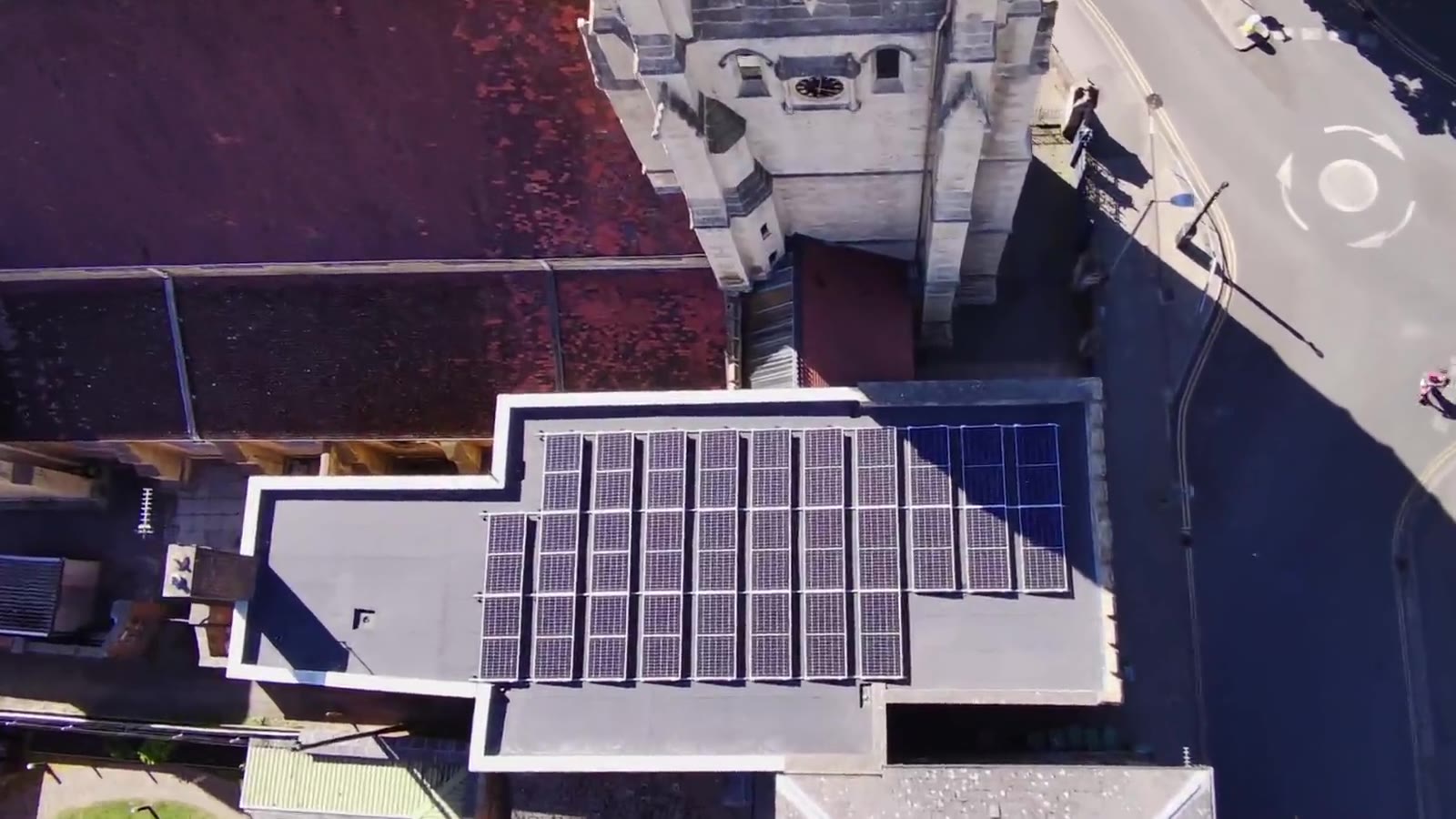
Commercial Solar · West Midlands
Commercial Solar Panels in Wolverhampton
Wolverhampton runs on making things. From Jaguar Land Rover's Engine Manufacturing Centre at i54 South Staffordshire to the fabricated-metal and aerospace supply chains around Wednesfield and Bilston, the city holds an outsized share of England's advanced-manufacturing base: and with it, acres of large, unshaded industrial roof. Those roofs are the single most under-used asset on a Wolverhampton balance sheet. Green Tech Hub designs, installs and maintains commercial solar PV for businesses in and around Wolverhampton, turning warehouse and factory roofscape into on-site generation that offsets a manufacturer's biggest controllable cost.
The economics are driven by self-consumption, not export. A well-oriented Wolverhampton roof yields roughly 900–1,000 kWh per kWp each year; the value is in using that power on site during single- or double-shift operation, so it displaces grid electricity at full retail rate. For the metal-bashing, cold-storage, poultry and engineering operations across the WV postcodes, where daytime demand is high and steady. That typically lands a commercial payback around three to five years, before you add the resilience of battery storage or the tenant-and-fleet appeal of workplace EV charging. As an MCS-certified, director-led installer working across the West Midlands from our base in Oldbury, we start every Wolverhampton project with a half-hourly consumption survey and in-house CAD layout, no roof gets a panel until the numbers prove out.
The borough next door is covered on our commercial solar Walsall page, whose worked example applies to Wolverhampton's engineering units too.
Solar on Wolverhampton's commercial buildings
Wolverhampton is a manufacturing city first: the local economy carries a concentrated automotive sector plus fabricated-metal production for the defence and aerospace industries, and around 10% of all advanced-manufacturing jobs in England sit here, the roof stock skews to large-span factory and warehouse units ideal for rooftop PV.
i54 South Staffordshire, the advanced-manufacturing park at Junction 2 of the M54, anchors the northern edge of the city with Jaguar Land Rover's Engine Manufacturing Centre alongside Moog, Eurofins, ERA and Atlas Copco, high-load, single-site occupiers whose daytime demand profile is a textbook match for self-consumed solar.
The Wednesfield and Neachells Lane corridor concentrates multi-let industrial roof: Satellite Industrial Estate, Planetary Industrial Estate, Pantheon Park and Revolution Park, with quick access to J10 of the M6, the kind of estate stock where landlords and SME tenants alike are weighing on-site generation.
Bilston is Wolverhampton's regeneration front line: Springvale Industrial Park on Union Street and the new Foundry Park warehouse scheme off Brook Street (developed by Goold Estates) show the direction of travel, the Foundry Park units ship with photovoltaic roof panels and EV charging as standard.
Beyond heavy industry, the city's business and science parks: Wolverhampton Business Park, Pendeford Business Park and Wolverhampton Science Park, house office, R&D and tech occupiers with flat and pitched roof space suited to PV and workplace charging.
Health and social care is the single largest employment sector in Wolverhampton (around 24,000 people), so care homes, community buildings and student/HMO accommodation add a second tier of steady-demand rooftops beyond the factory floor.
What City of Wolverhampton Council is doing
City of Wolverhampton Council declared a climate emergency on 17 July 2019, the first Black Country local authority to do so, and has committed to making its own operations net carbon zero by 2028, backed by an 87-point climate action plan endorsed by Cabinet.
The council reports it has already cut its direct carbon footprint by around 52% since 2019, with annual greenhouse-gas emissions falling from roughly 16,000 tonnes to about 7,600 tonnes, largely by switching to renewable electricity.
A separate city-wide ambition targets Wolverhampton as a net zero city by 2041, with a draft 20-step action plan encouraging greener businesses, clean energy and the low-carbon skills base, a policy backdrop that puts commercial rooftop solar squarely in scope for local firms.
Most commercial rooftop solar in Wolverhampton falls under permitted development rights, so a factory or warehouse installation generally proceeds without a full planning application. We confirm the position for every site and handle any listed, conservation-area or DNO considerations as part of design.
Local facts, sourced
Wolverhampton in numbers
Every figure below comes from a named public source, the same standard we hold our savings estimates to.
-
Wolverhampton's population was 263,700 at the 2021 Census, up 5.7% from 249,500 in 2011, a growing city economy whose commercial energy demand keeps rising.
Source: Office for National Statistics (ONS), Census 2021 population change, Wolverhampton (E08000031)
-
City of Wolverhampton Council has pledged to be net carbon zero across its operations by 2028 and reports a ~52% cut in its direct footprint since declaring a climate emergency in 2019 (emissions down from ~16,000 to ~7,600 tonnes/year).
Source: City of Wolverhampton Council, climate emergency / net zero 2028 announcement (wolverhampton.gov.uk)
-
i54 South Staffordshire, the advanced-manufacturing park at Junction 2 of the M54, is a joint venture between City of Wolverhampton Council, Staffordshire County Council and South Staffordshire Council, hosting Jaguar Land Rover's Engine Manufacturing Centre plus Moog, Eurofins, ERA and Atlas Copco, exactly the large-roof, high-load occupiers solar suits best.
Source: Staffordshire County Council / i54online.com, i54 South Staffordshire employers
-
Around 10% of all advanced-manufacturing jobs in England are in Wolverhampton, with a strong automotive sector and fabricated-metal production for the defence and aerospace industries, the roof stock skews to exactly the large-span factory units where PV self-consumption pays back fastest.
Source: Invest West Midlands / Invest Wolverhampton, key sectors: advanced manufacturing
-
The Wednesfield / Neachells Lane industrial corridor: Satellite Industrial Estate, Planetary Industrial Estate, Pantheon Park and Revolution Park, offers direct access to Junction 10 of the M6, concentrating multi-let industrial roof suited to rooftop generation.
Source: Mileway UK (Satellite Industrial Estate, Neachells Lane) property listing
-
In Bilston, Goold Estates' Foundry Park warehouse scheme off Brook Street was built with photovoltaic roof panels and electric-vehicle charging as standard, evidence that new-build Wolverhampton commercial stock is being specified solar-ready.
Source: City of Wolverhampton Council, Foundry Park / Goold Estates industrial-logistics scheme (wolverhampton.gov.uk)
-
Health and social care is Wolverhampton's single largest employment sector, with around 24,000 people employed, adding care homes, community buildings and student accommodation to the city's roster of steady-demand commercial rooftops beyond heavy industry.
Source: Varbes / Wolverhampton economy labour-market data
-
A south-facing 4 kWp array at 35 degrees in Wolverhampton is modelled at 3,822 kWh a year, 956 kWh per kWp; the city sits on National Grid Electricity Distribution's West Midlands licence area, confirmed on real WV postcodes.
Source: European Commission JRC, PVGIS 5.3 (SARAH3); Octopus Energy grid-supply-point API
Data last reviewed: July 2026
Proof
Work we have actually done.
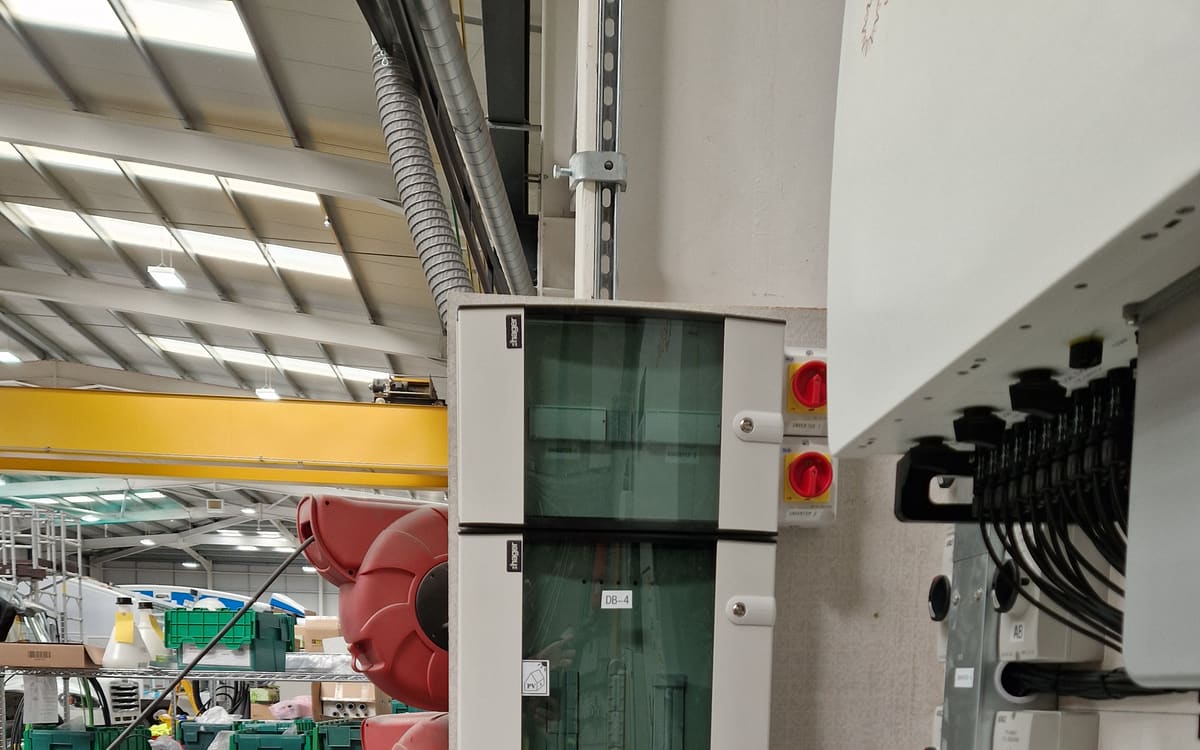
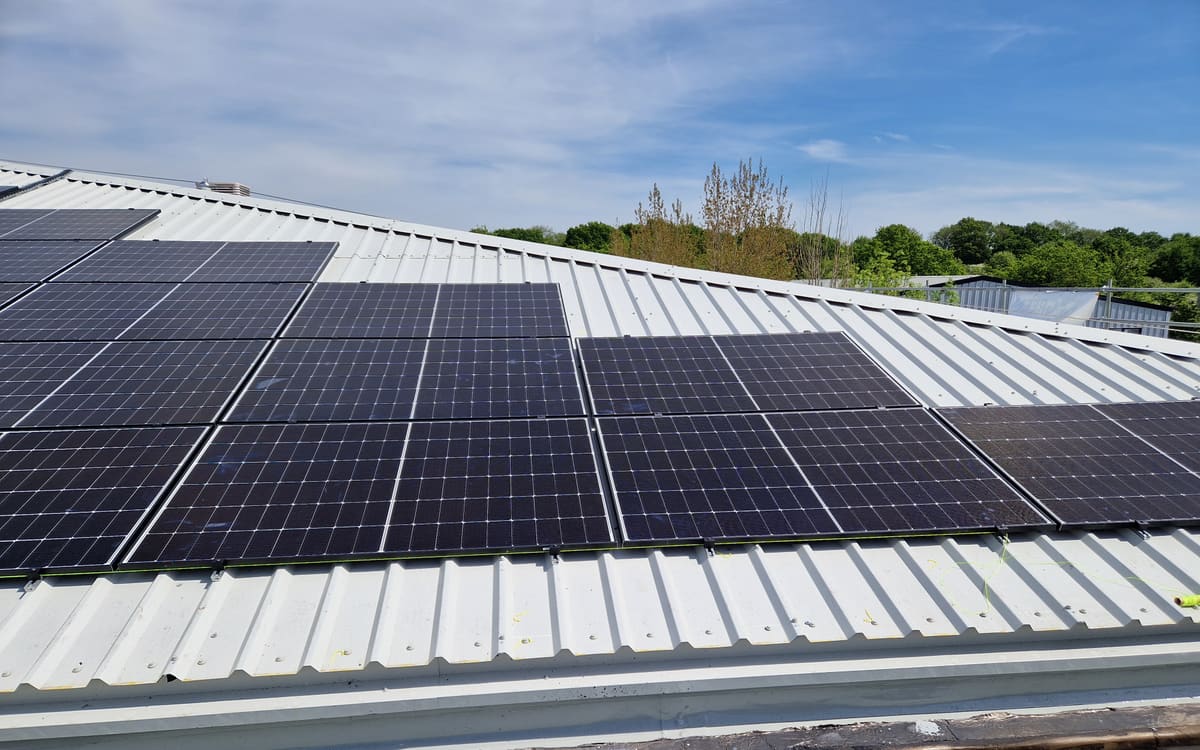
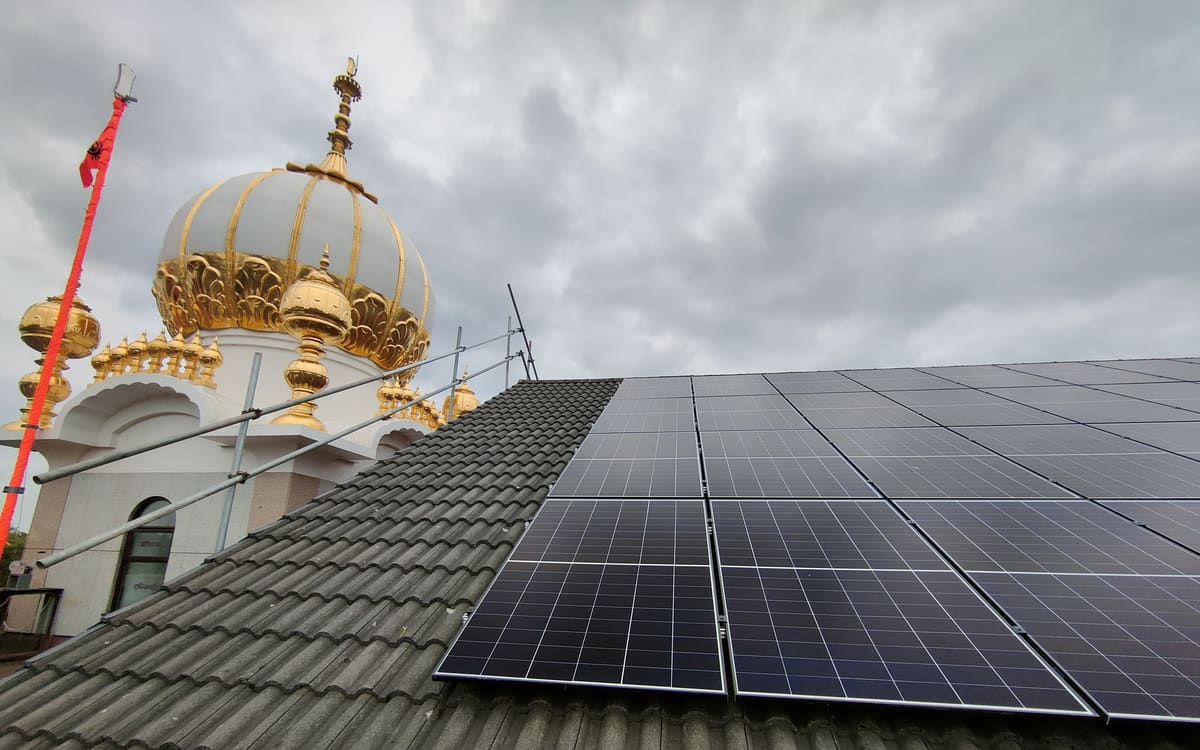
Recent Green Tech Hub installations across the West Midlands and beyond — every photo is our own project, not stock imagery.
The next step
Get a free half-hourly consumption survey and a CAD-designed proposal for your Wolverhampton site. Green Tech Hub is MCS-certified, director-led and covers businesses across the West Midlands from Oldbury — contact us to see what your roof could generate.
Wolverhampton commercial solar questions
What does commercial solar cost in Wolverhampton?
On DESNZ's 2025/26 figures for the West Midlands, £1,628 per kW for 4 to 10 kW systems and £1,233 per kW for 10 to 50 kW, so a 50 kWp array on a Wednesfield or Bilston unit is about £61,650 as an average job, with a simple steel-deck roof usually below that. The structural survey and the G99 application are in our fixed price.
How much roof does a Wolverhampton warehouse or factory need for worthwhile solar?
There's no hard minimum, but the large-span roofs typical of i54, Springvale and the Neachells Lane estates are where the numbers work hardest. As a rule of thumb, every kWp of panels needs around 6–8 m² of clear, well-oriented roof and generates roughly 900–1,000 kWh a year here in the West Midlands. Because the value comes from self-consuming that power during your shifts rather than exporting it, a single- or double-shift Wolverhampton operation with high daytime demand usually reaches payback in about three to five years. We confirm the exact figure with a half-hourly consumption survey before quoting.
Do I need planning permission for commercial solar on a Wolverhampton industrial unit?
In most cases, no. Commercial rooftop solar in Wolverhampton generally falls under permitted development rights, so a standard factory or warehouse installation proceeds without a full planning application. Exceptions apply for listed buildings, conservation areas and some ground-mount schemes. We check the position for your specific site with City of Wolverhampton Council, and handle Distribution Network Operator (DNO) notification or application as part of the design and commissioning process.
Does Green Tech Hub have an office in Wolverhampton?
We're based in Oldbury and cover businesses across the West Midlands, including throughout Wolverhampton and the surrounding WV postcodes: i54, Wednesfield, Bilston, Pendeford and the city's business and science parks. Being director-led and local means we survey Wolverhampton sites ourselves, design layouts in-house on CAD, and stay on hand for maintenance rather than sub-contracting the aftercare. You get a single accountable installer, not a call centre.
Can I add battery storage or EV charging to a Wolverhampton solar install?
Yes, and for many Wolverhampton sites it strengthens the case. Battery storage lets a manufacturer shift solar generated during the day into evening or early-morning shifts and adds resilience against grid interruption, while workplace EV charging supports fleet electrification and appeals to tenants on multi-let estates like those around Neachells Lane. New local schemes such as Foundry Park in Bilston already combine rooftop PV with EV charging as standard. We can design all three together or phase them as budget allows.
Nearby
We also cover Walsall commercial solar installers, commercial solar in Dudley and solar for West Bromwich businesses.
Homes too
Not a business? We also install solar panels and batteries for homes in Wolverhampton, from the same Oldbury office.
Get a straight answer for your Wolverhampton site
Get your free, no-obligation quote
Commercial solar, battery, EV or any electrical work — no pressure.